
When the first unit on scene isn't the ambulance service
Hemorrhage control for fire departments and mountain rescue is a hands-on trauma trainingcourse designed to help you reliably identify critical bleeding and effectively control it using available tools such as direct pressure, pressure dressings, tourniquets , and wound packing to bridge the gap until professional medical help arrives. Especially in rural areas, alpine terrain, or during technical rescue operations, during search operations, in poor weather conditions, or when access is restricted, the first unit to reach the patient is often not automatically a paramedic ambulance equipped with full emergency medical gear. Fire departments, mountain rescue teams, or other emergency responders may reach the injured person significantly earlier than the follow-up ambulance or emergency medical services.
In this phase, the deciding factor is not which professional rescue resources have already been dispatched or which medical assets might theoretically arrive later. What matters is which measures the team actually on-site can perform safely, structurally, and within the scope of their capabilities. This is precisely why this topic is aimed primarily at fire departments, mountain rescue stations, and similar emergency organizations, as well as commanders, medical officers, training coordinators, team leaders, and dedicated members who want to improve their care competencies in a practical way.
This is exactly where the practical need arises for mission-oriented trauma training that teaches modern, tactical techniques for the initial phase of care. The goal is not to turn fire or mountain rescue services into an ambulance service. The goal is to better master the medically relevant interfaces within their own operational mandate: prioritizing life-threatening bleeding, recognizing critical hemorrhages, consistently performing hemorrhage control, using available equipment safely, extricating injured persons under difficult conditions, ensuring heat retention, prioritizing the situation, and preparing a clean handover to the ambulance service, emergency doctor, or paramedics.
This article explains why hemorrhage control is relevant for fire and mountain rescue operations, what practical training under realistic conditions looks like, how equipment handling and organization-specific scenarios are practiced, what "Plan B" thinking means when follow-up care is delayed, which legal frameworks must be considered, and how this leads to suitable equipment concepts and specific training offerings for fire and mountain rescue services. Because in certain situations, time passes before professional emergency medical personnel can work on the patient. This time is not an organizational void, but a tactically and medically relevant phase in which the first unit on the scene can make a significant difference in survival chances and the quality of care.
Every organization has its mission – and its own expertise
Fire departments, mountain rescue, ambulance services, police, military, disaster relief, and other emergency organizations operate within different systems. Each organization has its own mission, its own depth of training, its own equipment, and its own operational reality.
The fire department is strong in technical rescue, firefighting, victim rescue, site safety, equipment operation, and leadership under dynamic conditions. Mountain rescue is strong in terrain, searching, rope techniques, alpine rescue, physically demanding situations, transport, and care in difficult-to-access environments. The ambulance service is strong in medical care, structured patient assessment, transport, and pre-hospital emergency medicine.
A trauma workshop for emergency organizations is not intended to replace these systems or tell anyone they are doing their job wrong. The added value lies in thinking outside the box.
Which principles from tactical medicine, hemorrhage control, care with limited equipment, and longer bridging times can be sensibly applied to fire departments, mountain rescue, or other emergency organizations? Which materials can provide practical benefits in specific situations? Which measures fit into one's own organizational and legal framework? And where is "Plan B" thinking needed when standard procedures reach their limits due to weather, terrain, multiple casualties, or delayed follow-up care?
It is not about competition between systems. It is about supplementation.
Hemorrhage control and 'stop the bleed' as a sensible starting point
Experience has shown that hemorrhage control is the most sensible entry point for trauma training for emergency responders. It is immediately understandable, practically relevant, and applicable in a wide variety of operational situations.
Critical bleeding can play a role in traffic accidents, forestry work, chainsaw injuries, sharp metal parts, knife or tool injuries, workplace accidents, falls, hunting accidents, technical rescues, or even urban stab wounds and, in rare cases, gunshot wounds. Life-threatening bleeding is always treated as the priority.
The focus is not on exotic specialized medicine. The focus is on concrete skills and the most important methods of stopping bleeding: Can the team quickly recognize critical bleeding? Can they consistently apply direct pressure? Do they master the primary measures of direct pressure, wound packing, pressure bandages, and tourniquets? Can they effectively apply a pressure bandage under operational conditions? Can a tourniquet be applied correctly, tightly enough, and in the right place to cut off blood flow in critical injuries? The Combat Application Tourniquet (CAT) is widely used for this. Tourniquets can be applied to all limbs, and different types may be considered depending on the situation. Has wound packing been practiced hands-on or only discussed theoretically, especially when a tourniquet cannot be used? Is it clear which material is used when – and where one's own limits lie?
This is exactly where STOP THE BLEED® content and courses for rapid hemorrhage control fit in fits very well. Direct pressure, wound packing, and tourniquet application are not topics that should only be seen on a slide. They must be practiced hands-on, corrected, and repeated.
For fire departments, mountain rescue teams, and similar organizations, such a workshop can also be combined with a STOP THE BLEED® certificate, provided the course format is planned accordingly. This creates a clear, tangible training benefit: participants do not just receive an overview, but train specific measures that can be relevant in the first few minutes of a trauma situation.
Theory is no substitute for equipment handling and wound packing
Bleeding control often seems simpler in theory than it is in the field. In the classroom, it sounds straightforward: apply pressure, put on a bandage, apply a tourniquet, pack the wound. In the field, you have to contend with the situation, clothing, blood, lighting conditions, gloves, stress, communication needs, personal safety, and technical measures.
The patient is in an awkward position. The injury is hidden under clothing. The scene is noisy. The injured person is trapped or difficult to access. It is cold, wet, or dark. The team is already physically fatigued. Simultaneously, securing the scene, technical rescue, reconnaissance, requesting additional support, and communication are all taking place.
Under such conditions, it is not enough to have seen a tourniquet once in a seminar room. A tourniquet must be applied practically. Multiple times. Even with gloves on. Even under time pressure. Even in awkward positions. You need to know that correct application can be painful, that the material must be tight enough, that the application should be documented, and that a tourniquet should not remain in place for longer than two hours, because a half-hearted application will not reliably control bleeding. That is precisely when confident handling makes the difference.
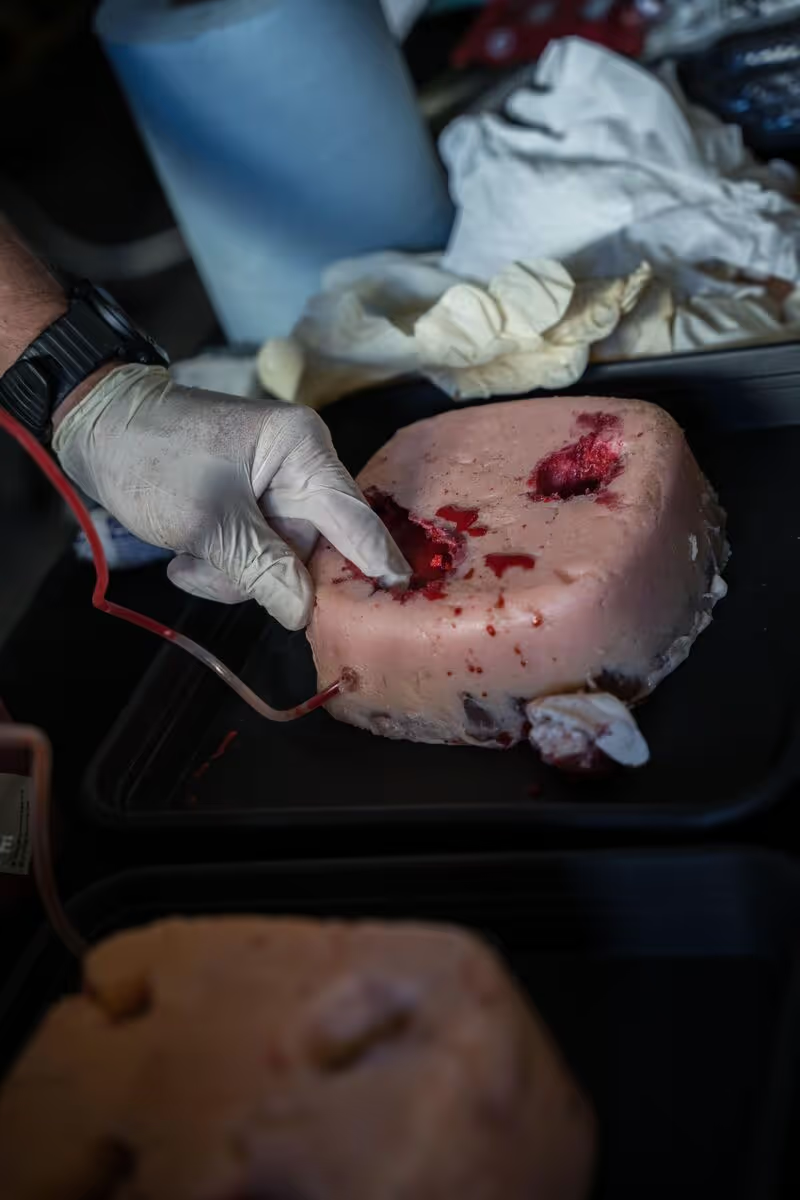
Wound packing must also be practiced hands-on with specialized wound-packing trainers . It is a measure that you must literally get a feel for. You have to insert wound-packing material into the wound cavity for deep wounds, where hemostatics accelerate the blood's natural clotting process, apply pressure, push down further, hold for at least 3 minutes to support coagulation, and understand that effectiveness does not come from the product name, but from correct technique, indication, and consistent execution.
Even a pressure bandage for bleeding control is more than just a wrapping exercise. It is applied over the wound and then does not need to be held manually. Field conditions reveal whether the equipment, techniques, and prioritization are a good match. A workshop must therefore not only convey knowledge; it must build equipment proficiency.
Don't train for the field in a T-shirt
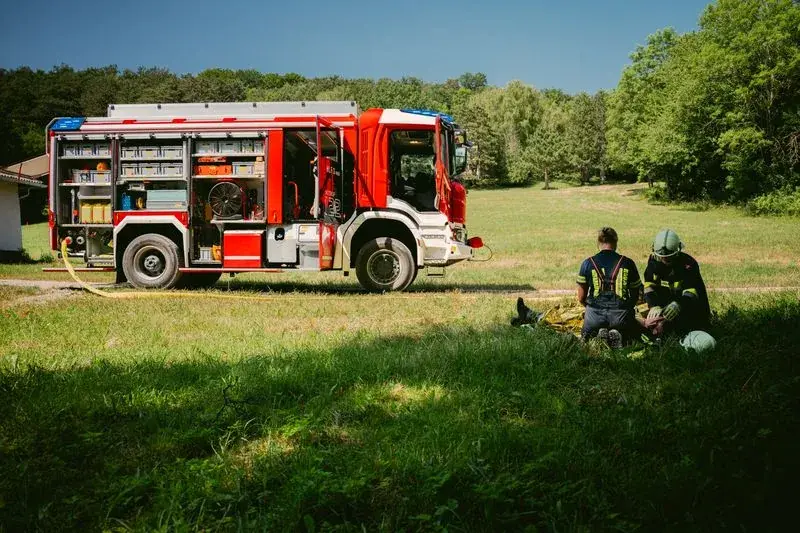
A common weakness of many training programs is that medical measures are practiced in normal clothing and a quiet environment. This may be useful for beginners. However, for fire departments and mountain rescue, it is not enough if you want to assess performance under realistic conditions.
Emergency responders do not work in T-shirts. They work with helmets, gloves, protective jackets, duty trousers, heat-protective clothing, cut protection, boots, harnesses, ropes, tools, breathing apparatus, and in conditions of wetness, dirt, snow, darkness, or heat. These factors significantly change simple measures.
Packaging is opened differently with firefighting gloves than with examination gloves. Trauma shears work differently on light clothing than on duty gear, cut-resistant material, or multiple layers. A tourniquet is applied differently on exposed skin than over thick protective clothing. Bleeding under heat-protective trousers can be underestimated for a long time because the material can absorb significant amounts of blood before a clear picture emerges from the outside.
Therefore, field-related trauma training should, if possible, be conducted using your own PPE and old equipment. Fire departments and mountain rescue teams can collect damaged duty clothing, old uniform parts, heat-protective trousers, jackets, cut-resistant material, harnesses, or equipment scraps in advance.
In training, you can then realistically test what is often just assumed: Do the available shears actually cut your own gear? How quickly can you reach the injury? Which clothing needs to be opened, cut, or removed? Does a tourniquet even work effectively over protective clothing? Which packages can be opened with the gloves you have? What Plan B does the team need if the standard procedure doesn't work?
Insights like these aren't gained in theory. They are gained through training with the actual equipment used in the field.
Scenario training: Scenarios must fit the organization
Trauma training for fire departments or mountain rescue teams shouldn't consist of random examples. It must align with the organization's operational reality.
For fire departments, scenarios can involve technical rescue, traffic accidents, the use of hydraulic rescue tools, chainsaw injuries, sharp metal debris, trapped persons, falls, lacerations, fire and evacuation situations, or accidents occurring during duty.
For mountain rescue, scenarios can focus on falls, hunting accidents with specific first-aid challenges,forestry accidents, lacerations in the field, long carry-outs, limited communication, darkness, cold, unavailable helicopters, difficult searches, or care in steep terrain.
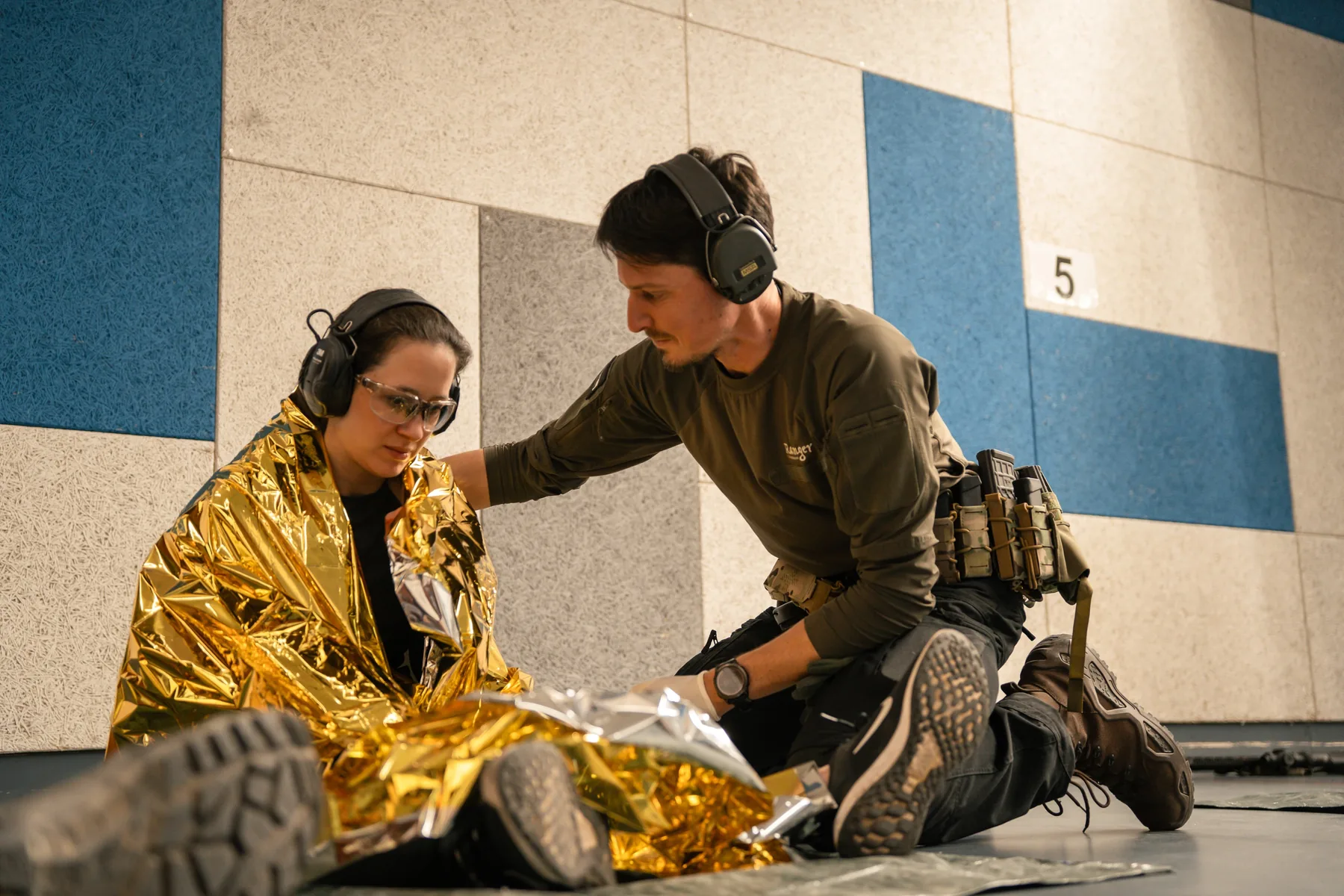
In urban centers or for specific operational profiles, additional focus can be placed on stab, laceration, impalement, and, in rare cases, gunshot wounds in the context of shooting ranges. This is not done for sensationalism or as an artificial tactical show, but as a factual supplement to the realistic injury patterns that emergency responders should be familiar with.
This doesn't make the training more complicated; it makes it more relevant. Participants recognize their own operational scenarios. Teams should practice hemorrhage control in regular drills using realistic emergency situations. Such scenarios also train emergency improvisation when standard equipment or procedures are insufficient. They discuss past operations, ask practical questions, and can immediately verify whether their equipment, procedures, and level of training match their specific operational profile.
When handover doesn't happen after a few minutes
The core of such a workshop remains hemorrhage control. Nevertheless, care shouldn't be artificially stopped after the first intervention. In some situations, handing over to EMS, emergency physicians, or paramedics isn't possible within a few minutes. Especially in the field, during bad weather, when access is blocked, when there are multiple casualties, or during large-scale incidents, the first unit on the scene may be tied to the patient for longer.
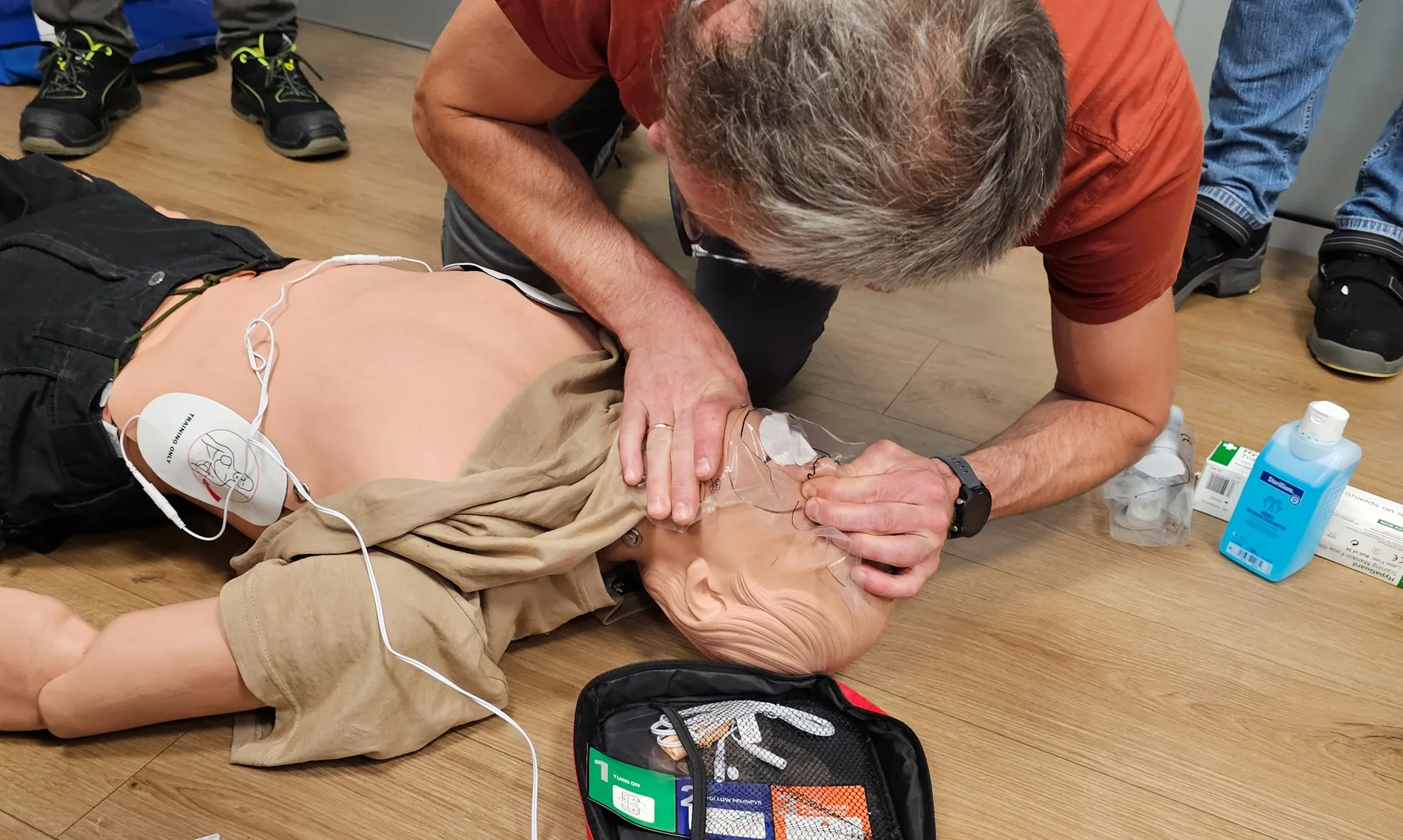
Then additional factors come into play: re-checking hemorrhage control, maintaining body heat, positioning, protection from the elements, communication, documentation, preparing for transport, and a structured handover. In such situations, the X-ABCDE protocol structures pre-hospital emergency care. The MARCH algorithm prioritizes massive hemorrhage at an especially early stage.
This is not a substitute for advanced emergency medical care. It is a realistic approach to dealing with delayed follow-up care.
This is where elements of prolonged field care thinking come in. Not as an overloaded special topic, but as a practical additional perspective: What does a team need to consider when they have to care for a patient longer than originally anticipated?
Fire departments and mountain rescue teams, in particular, are familiar with such situations from their operational reality. The patient has been reached but is not immediately transportable. Technical rescue takes time. The helicopter cannot fly. Access is blocked. The extraction is physically and logistically demanding.
In such situations, it helps not to have to think about Plan B for the first time during the actual operation.
Equipment concept and stations: on the person, in the vehicle, at the station
Another important point is the equipment concept. Not every responder needs to carry everything on their person. Not every vehicle needs the same equipment. Not every organization has the same mission. But every organization should consciously determine what equipment is available where and who is qualified to use it.
What does each individual responder carry? What is inside the vehicle? What is in the advanced medical backpack? What is available at the base? Which materials is everyone familiar with? Which materials are only known to medical leads? What has been purchased but never practically trained?
For hemorrhage control, tourniquets, hemostatic gauze, and other bleeding management materials, emergency bandages, wound packing gauze, hemostatic gauze, trauma shears, rescue blankets, and heavy-duty gloves can be useful. Depending on the operational profile, chest seals, marking materials, documentation, and additional measures for heat retention may also become relevant.
The crucial point is: equipment must match the level of training and the reality of the mission.
A tourniquet as a life-saving hemostatic agent in a vehicle is of little use if no one can find it, no one knows how to open it correctly, or no one can apply it reliably under stress. Conversely, a well-trained team with sensibly assembled trauma kits can bridge the time until follow-up care much more effectively.
Equipment consulting and training with realistic practice materials therefore go hand in hand.
A specialized perspective from other operational realities
Critical Knowledge does not claim to tell fire departments or mountain rescue services how to do their jobs. We provide a specialized, additional perspective.
Our training team at Critical Knowledge brings experience from tactical medicine, military-style medical training, RMT/NATO-certified training paths, prolonged field care-oriented training, scenario-based work, fire department medical services, mountain rescue environments, and specialized topics such as pediatrics, diving medicine, or realistic operational simulation.
In addition, we have training and operational experience under challenging environmental conditions: extreme cold, heat, restricted communication, limited equipment, delayed follow-up care, physical fatigue, and working in situations where a fully equipped rescue vehicle is not automatically available in the immediate vicinity.
This is not a better system. It is a different system.
Fire departments, mountain rescue services, and emergency medical services are professionals in their respective fields. Our added value lies in applying experience from tactical medicine, scenario training, limited-resource management, and care under austere conditions to the operational realities faced by fire and mountain rescue teams.
This exchange is particularly valuable. It does not compete with existing training systems; instead, it expands the toolkit.
Training for adult emergency responders
Emergency responders do not need artificial "feel-good" training. They need training that takes their mission seriously, respects their experience, and challenges them professionally.
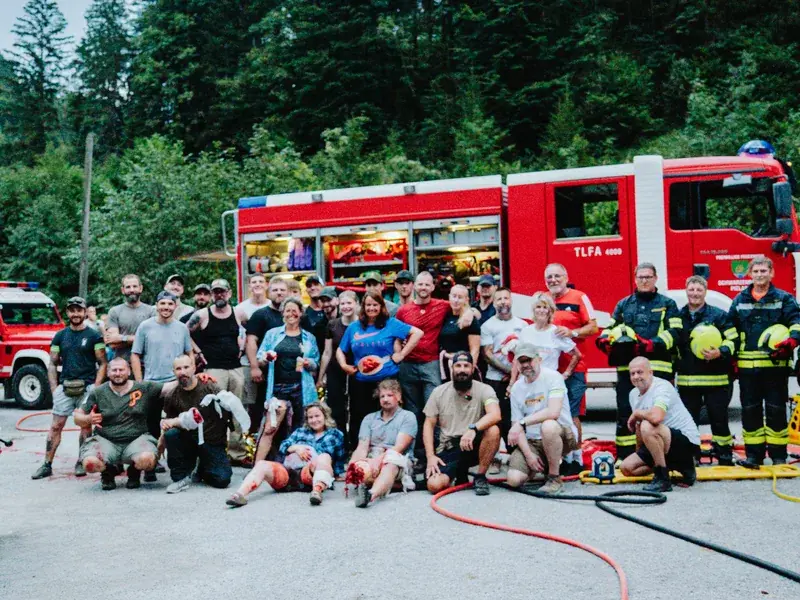
Effective trauma training for fire and mountain rescue services should be designed for adults: clear language, practical examples, clean demonstrations, plenty of hands-on practice, realistic scenarios, open discussion, and honest feedback.
Participants should be able to bring up questions from past incidents. They should test equipment, discuss their own solutions, recognize limitations, and develop "Plan B" options together. The training should be challenging but remain guided. It should be realistic but controlled. It should make mistakes visible without putting anyone on the spot.
When this is achieved, it becomes more than just a technical course; it becomes a shared training experience that builds team cohesion.
The team works together, tests equipment, experiences strengths and weaknesses, discusses procedures, and takes away concrete improvements. This is exactly how sustainability is achieved—not through slides, but through doing, reflecting, and repeating.
And it should be fun, too. Volunteer organizations, in particular, thrive on motivation, camaraderie, and shared development. Good training can be professionally serious while still being designed in a way that participants enjoy and want to share with others.
Legal and organizational framework
One point must remain clear: which materials and measures an organization is officially permitted to use in the field must be clarified within the respective legal, organizational, and medical framework.
Internal guidelines, SOPs, medical authorizations, service instructions, and training levels remain relevant. A workshop does not replace these authorizations.
However, it does create understanding, operational confidence, and a sound foundation for acting as effectively as possible within one's own framework. It also helps organizations better assess which equipment is useful, what level of training depth is necessary, and which internal procedures should be clearly defined.
Especially in life-threatening situations, it is better to train relevant measures in a structured way beforehand than to be confronted with equipment, indications, and procedures for the first time during an actual operation.
Sponsorship as a practical option
High-quality training costs money. This is a real factor, especially for volunteer organizations.
Fire departments, mountain rescue stations, and other emergency organizations must procure equipment, fund training, maintain vehicles, and manage many tasks simultaneously. At the same time, many regions have companies, partner businesses, municipalities, or private supporters who genuinely care about the work of these emergency organizations.
Experience shows that it is often possible to find sponsors for specific, high-quality training projects.
A trauma workshop on hemorrhage control is a tangible project. It strengthens the organization's operational readiness, increases member safety, and improves local care capabilities. Some sponsors cover course costs, fund equipment, or contribute to a safety day. Some may even want to be involved as observers or participants.
For officials and training officers, it can therefore be useful to not only discuss budgets internally but to actively involve regional supporters from the start.
This ensures that high-quality training doesn't fall solely on the shoulders of volunteers, but instead becomes a shared contribution to local safety.
Who is this workshop for?
Our trauma training for hemorrhage control is primarily aimed at fire departments, mountain rescue teams, and similar emergency organizations that want to provide their members with practical, hands-on professional development.
It is particularly suited for commanders, medical officers, training coordinators, drill instructors, station managers, team leaders, and motivated members who want to advance their organization's expertise.
The workshop can be conducted as a compact introductory session, a full-day workshop, a STOP THE BLEED®-focused training, or an advanced scenario-based training tailored to organization-specific situations.
The key is adapting to the mission. A fire department requires different scenarios than a mountain rescue team. An urban unit faces different risks than a rural organization. A team with extensive medical experience needs a different level of depth than a group training with tourniquets, pressure bandages, and wound packing for the first time.
That is why good training begins with a preliminary discussion: What missions are realistic? Which injury patterns are relevant? What equipment is available? What protocols apply? What is the current level of training? Are there any unanswered questions from past missions? What goals should the workshop achieve?
These answers don't lead to an off-the-shelf course, but rather to training that fits your organization perfectly.
Fire Department Workshop Package: Request a quote
We have developed a dedicated workshop package specifically for fire departments. This package is designed to combine hemorrhage control, equipment handling, and short, realistic scenarios in a way that aligns with the realities of firefighting.
Potential focus areas include tourniquets, pressure bandages, wound packing, accessing patients through turnout gear, working with gloves, equipment checks, short scenarios involving technical rescue, forestry, traffic accidents, or routine operations, as well as structured handovers to EMS or emergency medical personnel.
The package can be customized based on the specific fire department, their level of training, existing equipment, and desired depth. It can be scheduled as a compact workshop, a full-day training, a drill day, or in conjunction with STOP THE BLEED® content.
If you are a commander, medical officer, or training coordinator and would like to determine which option makes the most sense for your fire department, you can request the Fire Department Workshop Package directly.
Conclusion: Greater operational confidence at the interface of patient handover
Fire departments and mountain rescue teams don't need to replace EMS training. However, they can benefit immensely from training in critical hemorrhage control, basic trauma measures, equipment handling, and patient handover under realistic conditions.
Especially when professional medical personnel are delayed, terrain or weather complicate care, there are multiple casualties, or transport takes longer, the capability of the first unit on the scene determines the quality of the initial care phase. Exsanguination is the most common preventable cause of death, which is why early hemorrhage control remains so relevant—fast action can be the difference between life and death.
Hemorrhage control is the perfect starting point. Direct pressure, pressure bandages, tourniquets, and wound packing are concrete skills that you must not only know but be able to perform in practice. These can then be effectively built upon with chest seals, thermal management, extended patient care, "Plan B" thinking, and organization-specific scenarios.
The added value isn't in replacing existing systems. The added value is in expanding your own toolkit.
Fire departments, mountain rescue teams, and emergency organizations bring their operational reality, experience, and expertise. Critical Knowledge provides a specialized perspective rooted in tactical medicine, scenario-based training, prolonged field care concepts, and operations under challenging conditions.
Together, this creates training that isn't built for the classroom. It’s built for the field.
Our recommendation
If you want to train hemorrhage control in a practical way for fire departments, mountain rescue, or emergency response organizations: Request a trauma workshop for emergency responders.
If you are looking for a tailored format specifically for your fire department: Request a fire department workshop package.
If you are planning training with a STOP THE BLEED® certificate and organization-specific scenarios: Discuss a workshop with certification.
If you want to put together equipment for your organization effectively: Request equipment consultation and trauma kits.
If you want to train realistic scenarios using fake blood, operational gear, and your own equipment: Plan scenario-based training.
Sources and professional context
American College of Surgeons / STOP THE BLEED®: Get Trained – in-person, hands-on class on identifying and treating life-threatening bleeding using tourniquets, wound packing and pressure dressings. https://stopthebleedproject.org/get_trained/ European Resuscitation Council: Guidelines 2025 – First Aid. Resuscitation, 2025. https://www.resuscitationjournal.com/article/S0300-9572(25)00264-3/fulltext Tactical Combat Casualty Care (TCCC) Guidelines, current guideline document / CoTCCC. https://learning-media.allogy.com/api/v1/pdf/18ccfdfc-a076-47e9-8a34-376efdd81b43/contents
Note: Measures, use of equipment, and competencies must always be aligned with the respective legal, organizational, and medical framework of the organization.
Request a realistic simulation
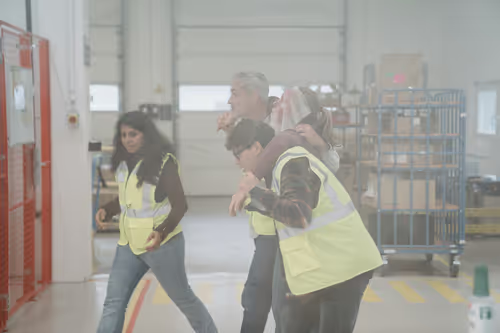
Transform your emergency training with realistic wound simulations and scenarios to create an intensive and effective learning experience for your team.
Discover our trauma kits
Purchase premium trauma kits, including tourniquets, bandages, and other essential materials for emergencies in challenging environments.
Book your first aid course
Prepare your team for critical situations with hands-on training and real scenarios. Learn how to react quickly in emergencies.

.avif)