
Standard first aid kit vs. modern trauma kit: What is the difference?
Almost everyone has a first aid kit—but hardly anyone really knows it.
Almost everyone is familiar with it: the classic first aid kit in the car, the orange first aid box on the wall, the first aid bag at work, or the first aid case somewhere in the office, workshop, clubhouse, or shooting range.
It’s there because it has to be. And that is fundamentally a good thing.
Standardized first aid equipment serves an important purpose. It ensures that basic supplies are available in specific locations. In vehicles, workplaces, construction sites, public areas, or at events, this is an important minimum standard. Without such requirements, there would likely be nothing available in many emergencies.
But the crucial question is not just whether a first aid kit is present somewhere.
The crucial question is:
Will someone find it in an emergency? Is it complete? Is the material still usable? And can you actually use it under stress to solve the problem right in front of you?
This is exactly where the difference begins between a standard first aid kit and a modern trauma kit. A trauma kit is a specialized first aid set for severe injuries, critical bleeding, and other life-threatening emergencies where a standard first aid kit often cannot help quickly or effectively enough.
Not because the standard first aid kit is bad.
But because it is designed for a different purpose. Whether you are a driver, at work, outdoors, hunting, at the shooting range, or in a club, if you take responsibility for yourself or others, you want to know the difference in an emergency, when which material is useful, and how to combine both effectively.
That is exactly what this is about: the differences between a classic first aid kit and a modern trauma kit, their effective use in an emergency, the role of training and preparation, and practical tips to ensure that your equipment not only exists but actually works when it counts.

The standard first aid kit or first aid set fulfills an important basic function
A standard first-aid kit is useful for many everyday situations.
For minor cuts, grazes, light bleeding, applying plasters, basic wound coverage, securing dressings, and protecting against contamination, this equipment is absolutely relevant. In many cases, a standard first-aid kit is perfectly sufficient.
Especially in cars, workplaces, or public areas, it is important that first-aid supplies are available at all. Plasters, compresses, gauze bandages, triangular bandages, emergency blankets, disposable gloves, and dressing packets can help with many injuries.
Therefore, one should not undervalue the standard first-aid kit.
It is not poor equipment. It is basic equipment.
The mistake only arises when one believes that this basic equipment is automatically optimal for every emergency situation.
Because a standard first-aid kit is usually put together according to regulations, minimum requirements, and economic packaging logic. It is intended to provide a defined set of basic supplies. It is designed to be storable. It is meant to fit into a vehicle, a wall-mounted box, or a workplace case. It is intended to enable many users to provide simple initial care.
That makes sense.
But it is not the same as a kit specifically developed for severe traumatic injuries, critical bleeding, high-stress situations, outdoor use, or carrying on one's person.
Compliant with standards does not automatically mean optimized for stress
A first-aid kit can be formally complete and compliant with standards—and yet still be difficult to use in a real emergency.
This is seen time and again in training.
People open a wall-mounted box and do not know what to grab first. Everything looks similar. Many packages are white, sterile-wrapped, folded multiple times, or have small labels. Sometimes manuals, instruction sheets, plaster sets, and individual packages fall out. Sometimes the box is logically organized; sometimes everything is jumbled together.
In some businesses or locations, the first-aid kit is clearly visible on the wall. In other cases, it is somewhere in the back, in an office, in a cupboard, in a storage room, at reception, or in an adjacent room. Sometimes it is sealed. Sometimes not. Sometimes everyone knows where it is. Sometimes only one person does.
And sometimes, even during training, you can see that the first hurdle is not wound care, but simply getting the wall-mounted box off its bracket quickly.
That sounds trivial. But it is not.
Under stress, simple things suddenly become difficult. Packaging that seems harmless in everyday life becomes impractical when wearing gloves or dealing with blood, cold, rain, or shaky hands. Material that should seem logical in the box is not immediately distinguishable to a layperson. Anyone who has never familiarized themselves with the contents must first search, read, choose, and improvise in an emergency.
This is exactly where time is lost, which is why a trauma kit or specialized emergency set should be kept easily accessible so that it is immediately within reach in an emergency.
The problem is rarely the content itself—it’s access, structure, and routine.
Many people own a first-aid kit without ever having looked inside.
They don’t know what materials are inside. They don’t know what the packaging looks like. They don’t know which bandage is meant for what. They don’t know if there are gloves. They don’t know if any materials have expired. They don’t know if anything is missing from a previous use.
In a car, the first-aid kit is often stowed away somewhere in the trunk, perhaps under luggage, tools, gym bags, or behind a side panel. In the workplace, the kit might be hanging in a spot that new employees aren't even aware of. In clubs or volunteer-run areas, supplies are sometimes taken but never restocked.
So the problem isn't just: What’s in the kit?
The problem is:
Where is the kit? Who knows where it is? Is it complete? Is it organized logically? Is it quickly accessible? Has anyone ever practiced using it?
A standard first-aid kit is only good if it is actually usable in an emergency.
Where the standard first-aid kit reaches its limits
The classic first-aid kit is great for basic care. However, it can reach practical limits when dealing with severe traumatic injuries.
That doesn’t mean you can’t do anything with it. Of course, you can use standard dressing materials to apply pressure, cover wounds, improvise, and treat patients. Especially when nothing else is available, a standard first-aid kit is better than nothing.
But for critical bleeding or deep wounds, you often have to hunt for and combine several different items. For an effective pressure bandage, you might need a wound pad, a bandage, pressure material, and tape. It can work, but under stress, you have to build it yourself.
With more modern materials, this logic is often already built-in. An Emergency Bandage is designed so that the wound pad, elastic bandage, and pressure application are combined into one product. A tourniquet is developed for life-threatening extremity bleeding; a Combat Application Tourniquet® is specifically intended for severe bleeding on limbs and, ideally, can be applied with one hand, as is the case with modern concepts for emergency hemorrhage control using tourniquets and bandages provide for. Wound packing gauze for tamponading deep wounds is intended for deep wounds where direct pressure alone is rarely enough. A chest seal is designed for specific open chest injuries and is not just any piece of plastic with tape.
The difference, therefore, is not just in the name of the material.
The difference lies in whether you have to improvise under stress—or whether you have a tool in your hand specifically developed for the job.
Bandage scissors are not the same as trauma shears
Another example is scissors.
Many standard first-aid kits contain simple bandage scissors. These may be sufficient for plasters, bandages, or light clothing. But anyone who has ever tried to quickly cut through heavy-duty outdoor gear, motorcycle clothing, hunting apparel, workwear, belts, straps, or multiple layers of clothing will notice the difference.
True trauma shears are designed to expose wounds and equipment more quickly and safely; such emergency rescue shears are engineered to cut through even robust fabrics rapidly. This is crucial because you cannot treat a wound you cannot see.
The same applies here: standard scissors are not useless. They simply have their limits.
And those limits often only become apparent when time is of the essence.

Modern trauma kits like the Wero Trauma Kit are built for different situations
A modern trauma kit or IFAK is not just a "better first aid kit."
It is designed differently.
A trauma kit is more focused on critical injury patterns and priorities: life-threatening bleeding, deep wounds, chest injuries, heat retention, personal safety, rapid access, clear organization, and durable packaging.
Such equipment is often more compact, highly compressed, packaged more durably, better protected against moisture, and better suited for transport in a backpack, range bag, vehicle, hunting pack, or on your person. It is often packed so that you can reach the essential components faster under stress, as is the case with professional trauma kits and IFAKs for emergencies or a compact IFAK Platform Premium as a robust trauma set .
This is no coincidence.
Many modern trauma materials originate from fields where time, stress, and environment play a major role: military, law enforcement, police, emergency services, tactical medicine, and outdoor and operational medicine. Equipment there is not used because it looks good, but because it offers a functional advantage in specific situations, and many of these concepts are now also being considered for civilian applications.
This advantage can also be relevant for civilians.
Not because every civilian should operate like a tactical team, but because severe bleeding, traffic accidents, workplace accidents, hunting accidents, shooting range accidents, outdoor injuries, or emergencies in remote areas can also occur in civilian life. Useful areas of application also include public facilities as well as places like airports, train stations, and department stores, for which such kits can be explicitly suitable.
The big advantage: less fumbling, faster action
Perhaps the greatest advantage of modern trauma kits is that they address specific problems more directly; depending on the setup, suitable Aids for ventilation and airway management, such as resuscitation masks, should be included.
In the event of severe bleeding, you don't want to have to search for five individual items in a wall cabinet, tear open packaging, and try to cobble together a solution. You want to apply pressure immediately, use the right equipment, and control the bleeding.
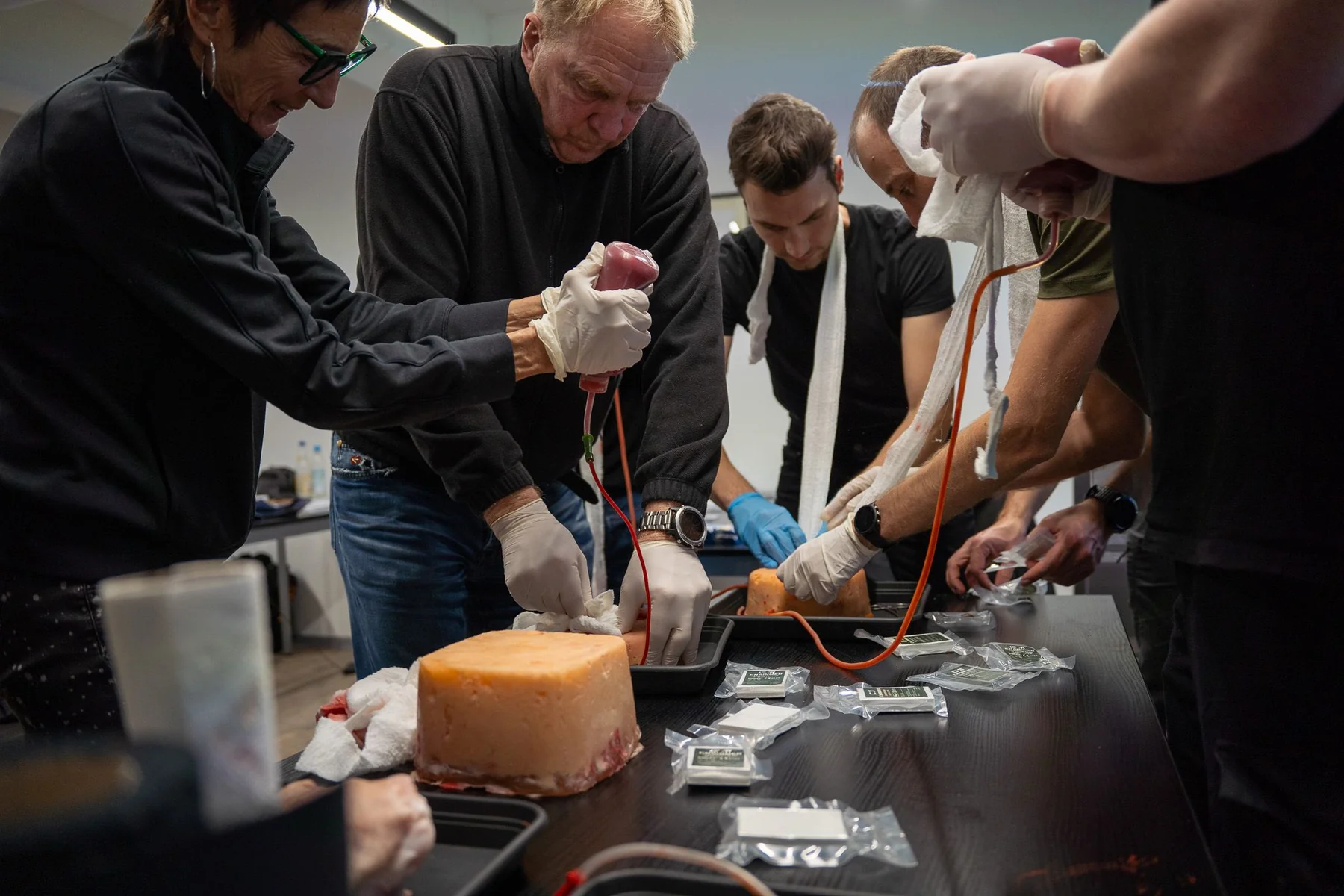
For a deep, heavily bleeding wound, you want to have suitable material for wound packing—and know how to use it; realistic wound packing trainers for emergency training help you practice these procedures hands-on.
In the case of an open chest wound, a trained user does not want to have to construct an improvised solution out of plastic wrap and tape when a proper chest seal is available.
In the event of life-threatening bleeding on an arm or leg, you want to have a prepared, practiced tourniquet ready to hand, rather than having to figure out how to improvise something similar with a standard bandage.
Of course, improvisation can be important in first aid. But improvisation is Plan B, not the goal.
If you can have professional equipment for a known critical problem and are trained in its use, that is almost always better than improvising under stress.
But modern equipment does not automatically mean skill
This is the most important point.
Modern trauma materials often seem intuitive. A tourniquet looks straightforward. An emergency bandage seems self-explanatory. A chest seal looks like a large, specialized adhesive bandage. Wound packing can look simple in a video.
But knowing is not the same as being able to do.
Watching a YouTube video is not training. Being told how to do something is not training. Unpacking a product once is not training.
Everything is harder under stress. Your hands shake. The patient is screaming. Clothing is in the way. There is blood. People are watching. The emergency call is in progress. You are unsure if you are taking the right action. Perhaps it is dark, cold, loud, or cramped. Perhaps you are alone.
In such moments, equipment only works well if you have practiced using it hands-on beforehand.
This is especially true for tourniquets, wound packing, hemostatic gauze, chest seals, and pressure bandages. You need to know when to use which piece of equipment. You also need to know when not to use it. You must be aware of common mistakes. And you must repeat the application process. First responders, in particular, should practice these procedures hands-on.
Modern trauma kits are therefore more than just equipment. They are a training commitment. Many kits and training programs are based on structured protocols like the MARCH protocol, and a well-thought-out IFAK checklist for contents and packing logic helps you plan your own trauma kit appropriately.
More training-intensive – but also more effective
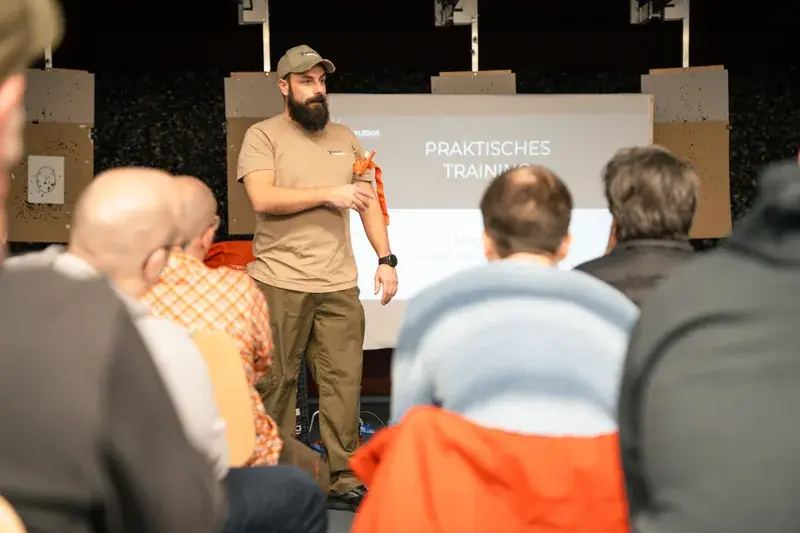
A standard first-aid kit is intended for basic measures. Many of the materials inside are relatively easy to use. Applying a plaster, placing a compress, wrapping a bandage – these are fundamentally simpler than packing a deep wound or correctly applying a tourniquet.
Modern materials can be more effective for severe injuries. But they also demand more responsibility.
This is not a disadvantage in a negative sense. It is an honest assessment.
Anyone who carries a professional trauma kit should be familiar with its contents. You should know not only what is inside, but also why it is there. You should practice where the equipment is located, how it is opened, how to use it under stress, and what its limitations are.
It is even better to repeat this regularly with the people you spend time with: family, friends, hunting parties, shooting clubs, outdoor groups, work teams, or event staff. You should not only train these procedures yourself but also regularly train groups and teams.
Because in an emergency, the person who packed the kit may not always be the one present.
"I'll take it with me, maybe someone else can use it" is the wrong approach
You sometimes hear: "I have the trauma kit with me in case someone else knows how to use it."
That is better than having no equipment at all. But it is not the right mindset.
Of course, it can happen that a medically trained person happens to be on site. But you shouldn't rely on that. Especially with critical bleeding, time is of the essence. If you just wait for "someone" to show up who knows what they're doing, valuable time can be lost.
The better approach is:
I carry equipment because I want to be prepared myself, within the scope of my training and legal capabilities.
This doesn't mean everyone has to become a professional. It means taking responsibility. Anyone who drives regularly, hunts, trains at the shooting range, is out with children, engages in outdoor activities, or is responsible for a team should ask themselves: What can I do in those first few minutes?
This attitude is a mindset shift away from the "leave it to others" mentality.
Not: "If something happens, someone will come along."
But: "If something happens, I might be the one who has to act first."
A trauma kit does not replace a mandatory first-aid kit
One important point must be clear:
A professional trauma kit does not automatically replace the mandatory vehicle first-aid kit, workplace first-aid box, or other legally or normatively required equipment.
It is a supplement.
If specific first-aid equipment is required in a car, business, or facility, it should be present, kept complete, and checked regularly. A trauma kit is an addition for when you want to be better prepared for specific critical injury patterns.
It’s similar to tools.
A basic toolkit is useful. But anyone doing specialized work needs additional specialized tools. One does not automatically make the other redundant.
For first aid, this means:
A standard first aid kit covers the basics. A trauma kit expands your capabilities for severe traumatic injuries—provided you are trained to use it.
Stationary, mobile, or carried on your person: the intended use determines the choice
Another difference lies in the design.
Standard wall-mounted boxes and many industrial kits are intended to be stationary. They hang in one place, sit in a room, or stay in a vehicle. They don't necessarily need to be carried in a backpack every day, opened outside in the rain, or be accessible on your body under stress.
A modern IFAK or trauma kit is often designed to be more mobile. It can be carried on your person, in a range bag, hunting pack, vehicle, outdoor backpack, or in an operational environment. It is usually more compact and focused on rapid access.
Here, too, there is no blanket right or wrong.
In a workplace, a highly visible wall-mounted box can be useful. In a car, you need the legally required first aid kit. At a shooting range, a stationary trauma kit near the entrance can be useful in addition to your own range bag kit. When hunting, a small IFAK on your person and an expanded kit in the vehicle can make sense. When traveling, a basic kit can be supplemented with personal medication, disinfectants, and additional trauma components depending on the destination.
The question is always:
Where am I? What is my risk? How quickly will help arrive? Who is with me? What am I trained to use? What is required by law or organizational policy?
Depending on the situation, you can add more
A trauma kit is not the end of your preparation. Depending on the environment, further equipment may be useful, but additional medical products or supplies only provide real value if they match your risk profile and your training.
In some areas, a AED is an incredibly important component. In other settings, additional emergency blankets, heat retention, insulation materials, lighting, gloves, communication devices, or marshalling concepts are more important. In summer, heat protection, shade, water for the environment and cooling, as well as organizational measures can play a role. In winter, protection against the cold, dry surfaces, and hypothermia prevention can become more important.
A personal med-kit or pill-kit can be useful for travel, outdoor activities, or for people with known medical needs. Oxygen can play a role in certain professional or organizationally regulated areas, but it does not belong in every private kit without training and a clear concept.
The same applies here: equipment must match the risk, the training, and the legal framework.
More equipment does not automatically mean better preparation.
Better preparation is achieved when equipment, training, storage, accessibility, and application all align.
The best approach is not either/or
The question should not be:
Standard first-aid kit or modern trauma kit?
The better question is:
What is the role of each system?
The standard first-aid kit is the foundation. It is mandatory or recommended in many areas, readily available at a low cost, and useful for many everyday injuries. It should be complete, accessible, and familiar to those who might use it.
The modern trauma kit is a supplement. It is more targeted toward severe traumatic injuries, critical bleeding, high-stress situations, and environments where rapid access and robust materials are essential.
Both have their place.
The mistake would be to dismiss the standard first-aid kit as completely obsolete. The other mistake would be to believe that a standard first-aid kit provides optimal preparation for every severe injury.
The truth lies somewhere in between.
Everyone needs a foundation.
Expansion requires training.
And good preparation requires both.
Criterion
Standard first aid kit
Modern trauma kit / IFAK
Purpose
Basic everyday care
Supplement for critical, traumatic injuries
Typical use cases
Cuts, scrapes, minor bleeding
Life-threatening bleeding, deep wounds, chest injuries
Example contents
Adhesive bandages, compresses, gauze bandages, triangular bandage, emergency blanket, trauma shears
Tourniquet, wound packing gauze, emergency bandage, chest seal, hemostatic gauze, trauma shears
Training required
Low – easy to use
High – requires practical training
Design / Location
Mostly stationary (wall-mounted box, car, workplace kit)
Mostly mobile (on your person, in a backpack, or range bag)
Regulation
Often legally required (DIN 13157/13169, DIN 13164, KFG § 102, ÖNORM Z 1020)
No legal requirement – voluntary addition
Cost
Affordable, basic equipment
More expensive – robust, specialized gear
What you should actually do
The first step isn't immediately buying gear.
The first step is getting to know the gear you already have.
Open your first aid kit. Look inside. Check that everything is complete. Check expiration dates. Consider whether you would know what to grab first in an emergency. Ask yourself where the kit is in your car and whether you can reach it even with a fully loaded trunk. At work or at your club, check whether everyone knows where the first aid kit is located.
The second step is Training.
If you have only trained basic measures, then solidify those: emergency call, personal safety, applying pressure to bleeding, checking consciousness and breathing, recovery position, CPR, AED, keeping the patient warm, and handover.
If you want to be able to do more, then train specifically for: tourniquet, wound packing, emergency bandage, hemostatic gauze, chest seal, gear management, and stress protocols.
The third step is a sensible Setup.
Don't just buy any kit because it looks tactical. Don't blindly pack everything recommended online. Instead, think: What do I really need? Where am I going? How quickly will help arrive? Who is with me? What am I capable of using? What should be within reach? What stays stationary? What do I carry on my person? Also, make sure to choose a suitable Selection of high-quality medical equipment for emergencies.
This is how true preparation is built.

Relevant training
If you want to learn how to respond correctly to life-threatening bleeding, a STOP THE BLEED® course is a sensible starting point. It covers direct pressure, wound packing, pressure dressings, and tourniquet application – a dedicated Stop The Bleed® hemorrhage control course teaches these skills in a practical way.
If you want to feel more confident in emergencies during everyday life, while traveling, with your family, or outdoors, an Active Life Saver training is a better fit. It covers a broader range of topics, including orientation, emergency calls, basic measures, critical situations, and structured action.
For shooting ranges, sport shooters, and range environments, a Shooting Range Life Saver is useful because it addresses not only equipment but also range organization, safety, role distribution, and realistic scenarios; a specialized first aid training for shooting ranges with a focus on tourniquets and trauma delves into exactly these topics.
For hunters and field situations, the Hunting Life Saveris appropriate, as factors such as remote locations, weather, firearms, dogs, terrain, communication, and longer wait times play a special role; a course tailored to this First aid training for hunters for hunting accidents and bleeding addresses these specific needs.
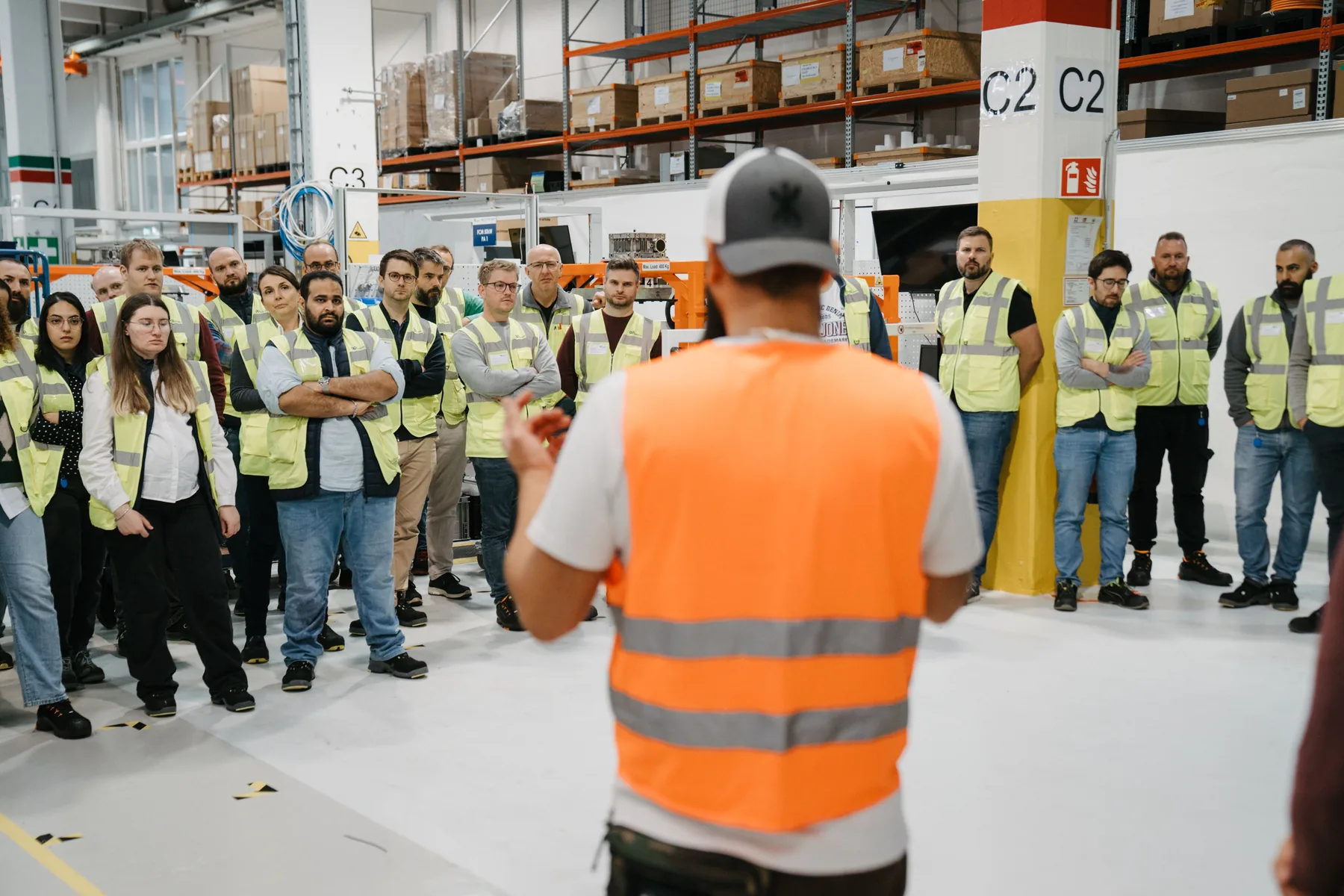
For businesses, clubs, or organizations, a corporate training session is a smart choice when first aid needs to be more than just a policy on paper—it needs to work in practice. This is especially true for public institutions and aid organizations.
FAQ: First Aid Kit vs. Trauma Kit
Does a trauma kit replace a standard first aid kit?
No. A trauma kit does not replace a mandatory vehicle first aid kit or an occupational first aid kit. It complements them.
Is a standard first aid kit bad?
No. It is important for basic care and useful for many everyday situations. Its limitations become apparent primarily in cases of severe traumatic injuries, critical bleeding, and high-stress situations.
Why is a trauma kit more expensive?
Because the materials are often more robust, compact, specialized, and designed for specific critical injury patterns; when comparing, price, potential shipping costs, and whether you are looking at the cost per unit or per pack also play a role. Furthermore, many components are designed for rapid use under stress.
Can I use modern trauma materials without training?
You should only use equipment you are confident in handling. Specifically, tourniquets, wound packing, hemostatic gauze, and chest seals should be practiced hands-on.
What is the most important difference?
A standard first aid kit provides basic care. A modern trauma kit is a specialized supplement for critical injuries and hemorrhage control, designed for the rapid treatment of injured persons in critical situations.
Conclusion: The first aid kit is the foundation, the trauma kit is the supplement
A standard First aid kit is important. It is widely used, often mandatory, and makes perfect sense for many types of injuries.
But it is not the best answer for every situation.
For severe traumatic injuries, critical bleeding, outdoor scenarios, shooting ranges, hunting, traffic accidents, or when help is delayed, a modern trauma kit can be a valuable addition. The number of MCI- and mass casualty-incidents has also come into sharper focus in recent years.
Not because it looks more modern.
But because it is better prepared for specific problems.
The decisive factor, however, remains training.
Equipment alone does not make anyone capable of acting. A good first aid kit, a good trauma kit, and regular training go hand in hand.
Because in an emergency, it doesn't matter what is lying somewhere in a box.
What matters is whether you can find it, understand it, and use it.
Our recommendation
If you want to add useful items to your gear: View trauma kits and IFAK refills– depending on the item, there are significant differences in content, for example with the WERO Trauma Kit with Combat Application Tourniquet® or with rhino rescue with 17 pieces; therefore, check the brand and product description instead of buying based on the name alone.
If you want to practice hemorrhage control: Book a STOP THE BLEED® course
If you want to feel more confident in emergencies in general: Attend Active Life Saver
If you want to prepare your team, club, or company: Request corporate training
*Button CTA: View trauma kit Second CTA: Book a STOP THE BLEED® course Third CTA: Request corporate training
Sources and professional classification
DGUV / DIN 13157 and DIN 13169: First aid supplies in workplaces.
DRK / DIN 13164: Vehicle first aid kits in Germany.
oesterreich.gv.at / KFG § 102: First aid kits for motor vehicles in Austria.
Austrian Labour Inspectorate / ÖNORM Z 1020: First aid kits for workplaces and construction sites.
STOP THE BLEED®: Hemorrhage control via direct pressure, wound packing, and tourniquets.
RCUK / ERC First Aid Guidelines 2025: life-threatening bleeding, direct pressure, dressings, wound packing, and tourniquets depending on the situation and training.
TCCC Guidelines: professional/tactical classification of tourniquets, wound packing, and chest seals in the appropriate context; this also includes CAT tourniquets such as the Combat Application Tourniquet®, which can be applied with one hand.
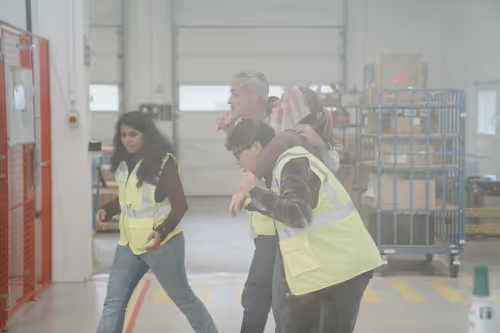
Request a realistic simulation
Transform your emergency training with realistic wound simulations and scenarios to create an intensive and effective learning experience for your team.
Discover our trauma kits
Purchase premium trauma kits, including tourniquets, bandages, and other essential materials for emergencies in challenging environments.
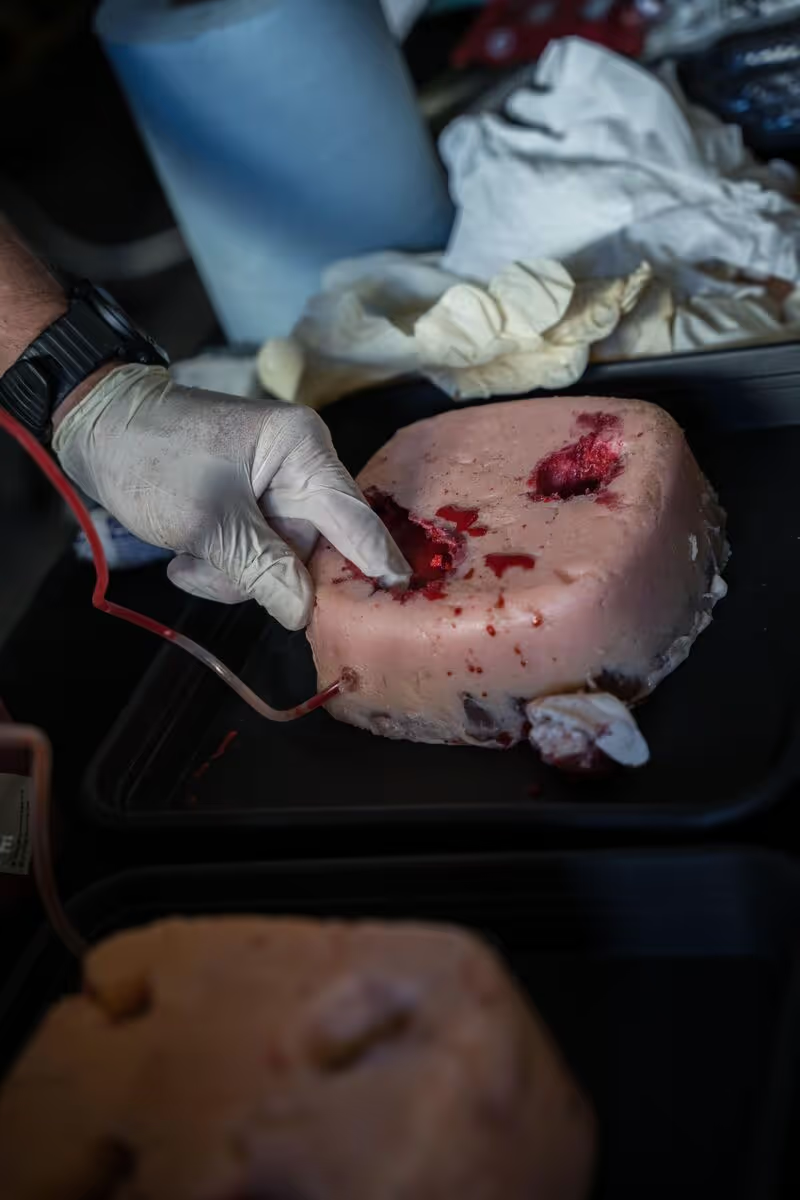
Book your first aid course
Prepare your team for critical situations with hands-on training and real scenarios. Learn how to react quickly in emergencies.

.avif)