
An emergency at a shooting range is rare — but when it happens, every second counts.
One gunshot wound It's no ordinary injury. It is almost always associated with potentially life-threatening bleeding.
First aid skills are of great importance not only at work, but also in leisure time and for other people. Knowledge and regular training in first aid are crucial for being able to act safely and competently in emergency situations. First aid courses are essential to be prepared for emergency situations — including at a shooting range. Effective training provides the ability to remain calm and confident in action at critical moments.
That is why belongs First aid at the shooting range among the most important safety factors for:
- sport shooters
- Range Owner
- security forces
- hunting groups
- Association manager
In this guide, you'll learn:
- How to safely manage a shooting accident
- How to properly treat a gunshot wound
- When you need to use a tourniquet
- How Woundpacking works
- How do you coordinate the rescue chain
- What equipment should be available at every shooting range
-nickrainerphoto-308%20(1).avif)
Why first aid at shooting ranges is special
A shooting range is significantly different from other emergency locations.
The aim of a clear safety concept is to ensure the safety of all parties involved and to prevent accidents. The shooting director plays a central role in organising and monitoring safety at the shooting range. A security protocol should include defined roles and responsibilities for all participants.
Particularities of an emergency at the shooting range
- Weapons are in the game
- several people present at the same time
- Noise, stress, adrenaline
- often remote locations
- high dynamics
- The environment and environment must be given particular consideration in risk analysis and security planning
That means:
First aid at a shooting range starts with safety — not with bandages.
Step 1 — Establish safety (Range Safety First)
Before you medically intervene:
At the shooting range, self-protection always comes first. Before you perform a medical operation, you must ensure that there is no danger to yourself or others.
Structured deployment and a clear safety concept at the shooting range are necessary to systematically minimize risks.
1. Stop fire
- Instant “Cease Fire.” A standardized emergency stop signal such as “STOP! STOP! “should be established for all participants to ensure a clear and quick response in an emergency. In the event of an incident, shooting operations must be stopped immediately to guarantee the safety of everyone present.
- Secure weapons
- Remove magazines
- Check safety status
2. Stabilize the situation
- Don't panic
- clear instructions
- Keep bystanders at a distance
The right behavior in such a situation is crucial for the safety of everyone involved. A quick and clear assessment of the situation helps to react appropriately and avoid further risks.
A second incident is the biggest risk.
.avif)
Detecting gunshot wounds — what is critical?
One gunshot wound Can:
- Have an entry and exit wound
- bleed heavily
- cause internal injuries
- Affect bones, vessels, and organs
Gunshot wounds are caused by the shot and create a destruction channel which expands in the direction of shooting in the shape of a funnel. The surrounding tissue is displaced both in the direction of shooting and across the shot path. Splinters and projectile fragments can also cause various injuries. The severity and nature of gunshot wounds are influenced by various factors such as bullet construction, distance, impact speed and the affected tissue. The temporary wound cavity created by the projectile collapses almost immediately due to the elasticity of the tissue, leaving only the destructive channel.
A normal car first aid kit is inadequate for treating gunshot wounds. The right treatment and care for gunshot wounds is crucial to save the life of the injured person.
alarm sign
- pulsating heavy bleeding
- rapid blood accumulation
- pallor, perspiration
- perplexity
- rapid pulse
- change of consciousness
In just a few cases, these dramatic symptoms occur, but then you have to act immediately and correct the situation to avert further dangers.
For such signs, the following applies:
Stopping bleeding is a top priority.
The three core measures in case of shooting accidents
In the case of heavy bleeding, the focus is on three techniques:
- tourniquet
- Woundpacking (wound tamponade)
- pressure bandage
Care is a priority measure in the event of shooting accidents and must be well organized and coordinated to ensure the safety of everyone involved.
Severe bleeding should be stopped by covering the wound with sterile compresses or a pressure bandage. In case of extreme bleeding on arms or legs, apply additional pressure to the appropriate pressure point.
Use tourniquet in case of gunshot wound
A tourniquet is the most effective way to control life-threatening bleeding in extremities.
Tourniquet treatment is part of structured emergency management at the shooting range.
When to use?
- severe bleeding on the arm or leg
- Blood splashes or pulsates
- rapid deterioration
Tourniquet step by step
- Lay high and tight
- Tighten the band
- Turn windlass until bleeding stops
- secure
- Note time
- Don't loosen it again
Typical mistakes
- too loose
- too deep
- Uncertainty → deployed too late
Important:
A correctly applied tourniquet is painful — but life-saving.
-nickrainerphoto-228.avif)
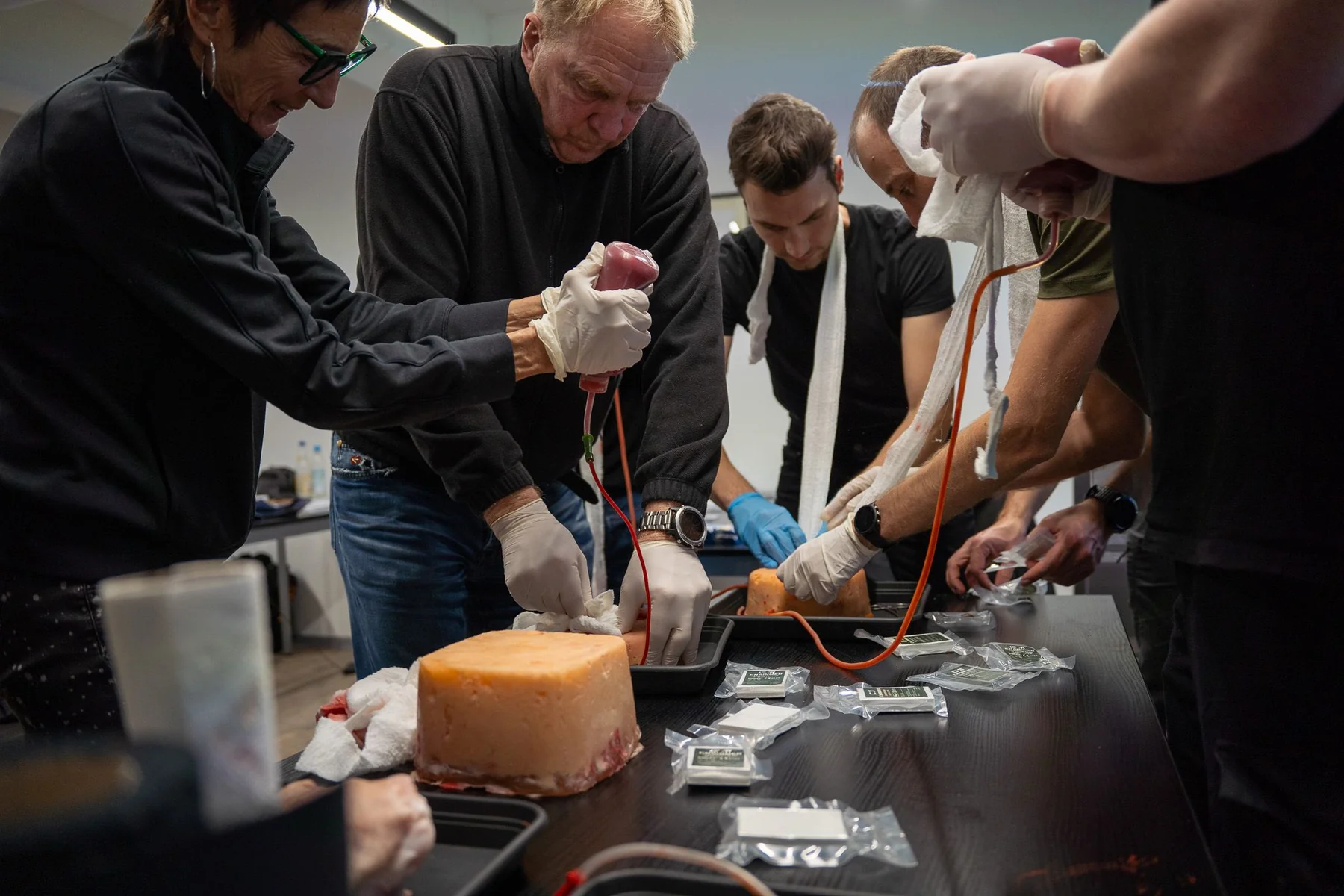
Woundpacking for gunshot wounds in the trunk area
Not every gunshot wound is to the arm or leg.
Treating gunshot wounds in the trunk area in particular is a particular challenge and requires structured care to quickly and effectively control life-threatening bleeding.
For injuries in:
- ledge
- armpit
- neck base
... Woundpacking is necessary.
Wound tamponade step by step
- Expose wound
- Localize bleeding center
- Press gauze deep into the wound
- Maintain constant pressure
- Then fix
Important:
Don't just “put it on top” — actually tampon.
Apply pressure bandage
For controllable bleeding, a clean pressure bandage is often sufficient. Treatment with a pressure bandage is an important measure to stop bleeding and should be organized and coordinated as part of medical care at the shooting range.
Proceed
- Apply a sterile compress
- build up strong pressure
- Fix tightly
- Control bleeding
- If necessary, second bandage on top
Don't constantly open and check — this destroys coagulation.
Coordinate rescue chain at shooting range
A structured process is crucial.
The emergency services may only enter the hazardous area after the police have secured and released the room. A defined room or meeting point for emergency services outside the danger zone must be set up to ensure a safe and efficient handover.
Standardised communication via radio and the transfer of clear information are essential in the event of a shooting accident to ensure fast and effective care. A structured emergency call and coordinated information can significantly influence the response time and effectiveness of medical assistance.
Checklists for the processes should be created so that all safety-relevant measures can be reliably implemented even under stress.
Make an emergency call correctly
- Location (address or coordinates)
- What happened
- Number of injured people
- state
- Detector name
It is important to provide complete and clear information when making an emergency call. Use a standardized emergency call to communicate all relevant information in a structured and understandable way.
Organize referrers
- Put person at the driveway
- Rescue workers receive
- Secure access
- The referrer should guide the emergency services to a safe room or transfer point outside the danger zone.
Hypothermia after gunshot wounds
Many underestimate:
blood loss + stress → hypothermia.
Even in mild weather.
For this reason, injured people should always be laid down and kept warm in order to prevent shock and protect the lives of those affected as best as possible.
measures
- Isolate injured people
- Insulate floor
- Emergency blanket
- windscreen
- soothe
Hypothermia massively worsens blood coagulation.
What equipment belongs at every shooting range?
A professional shooting range should have at least:
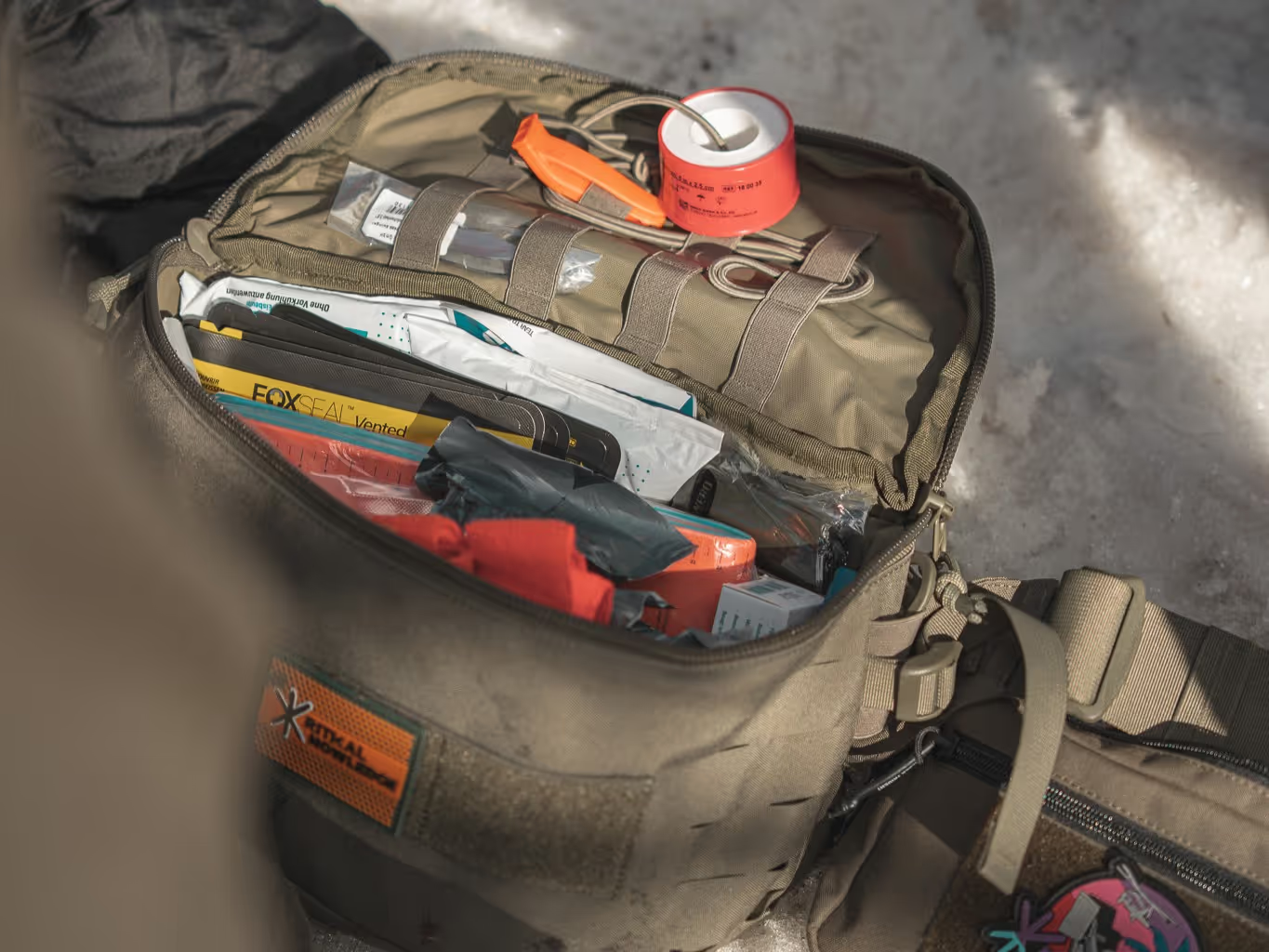
After the introduction, it is important to stress that suitable equipment and a specialized first aid kit (IFAK) are essential for the safe operation of a shooting range in shooting sports. The IFAK must be available quickly and should include tourniquets, pressure bandages, hemostatic gauze, emergency blankets and disposable gloves. Professional shooting ranges place high demands on equipment and organization to ensure fast and effective care in the event of firearms accidents. As part of shooting operations, the careful selection and provision of material is crucial in order to minimize risks and to be legally protected in an emergency.
Minimal equipment
- tourniquet
- Emergency Association
- sterile compresses
- gloves
- Emergency blanket
Advanced equipment (recommended)
- hemostatic gauze
- IFAK sets
- shears
- markers
- AED
Even more important than equipment:
training.
.avif)
Why shooting range emergency training is crucial
In an emergency, everything happens at the same time:
- stress
- gore
- noise
- multiple stakeholders
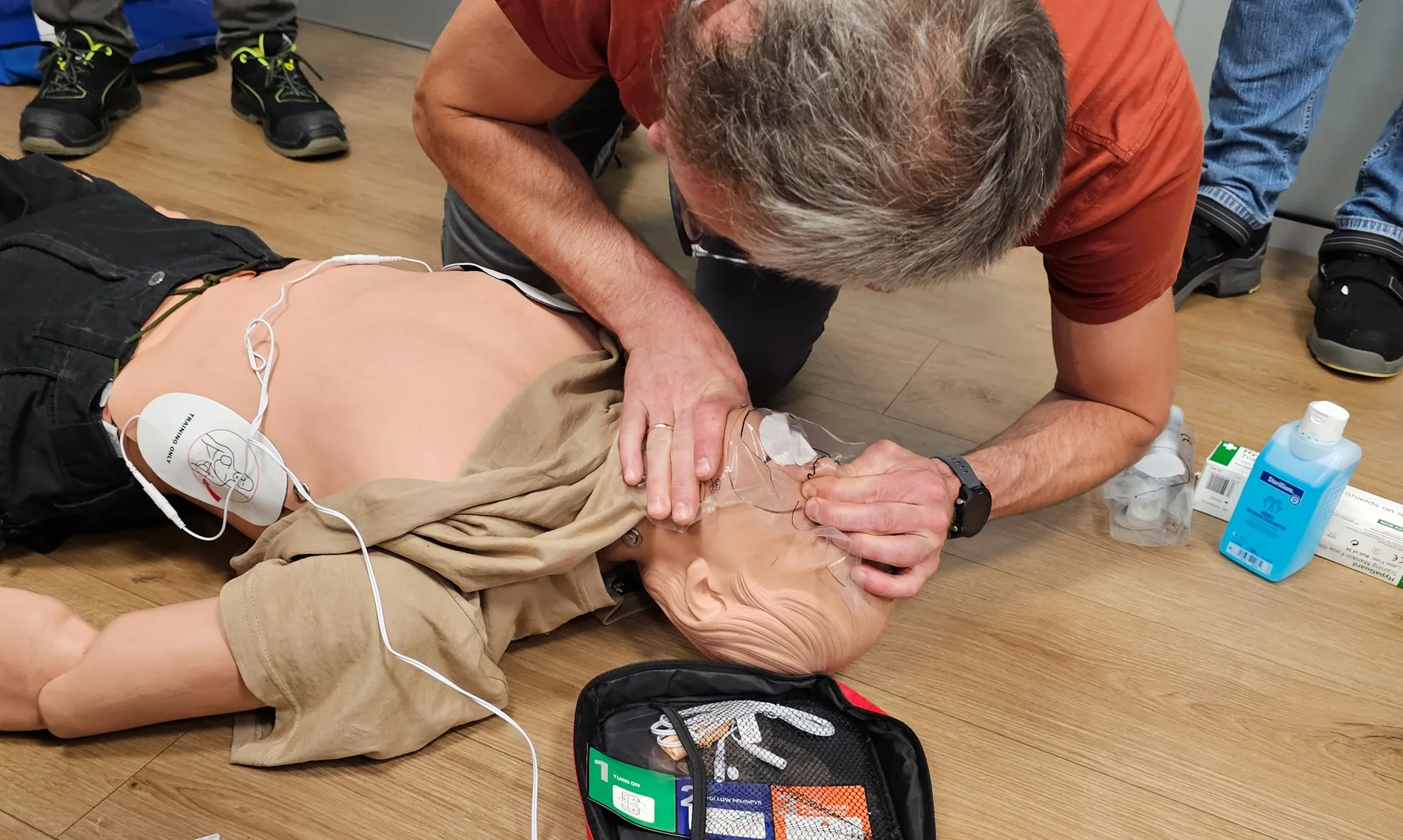
Basic courses and advanced courses, such as those offered by the German Red Cross, require no previous knowledge. They provide crucial knowledge and operational confidence to train as many first aiders as possible. These courses cover the basics of first aid as well as special modules such as cardiopulmonary resuscitation. Continuing education and practical courses, in particular on cardiopulmonary resuscitation, are essential for regularly deepening one's own skills and keeping them up to date.
Checklists and specific questions during training help you to act effectively even under stress. By interviewing and clarifying open issues, risks can be minimized, responsibilities clarified and a rapid assessment of the situation made possible.
Only who a Trauma training for shooting ranges has completed, can:
- Act in a structured way
- Prevent mistakes
- Stop bleeding
- Organize a rescue chain
A hands-on First aid course for shooters should include:
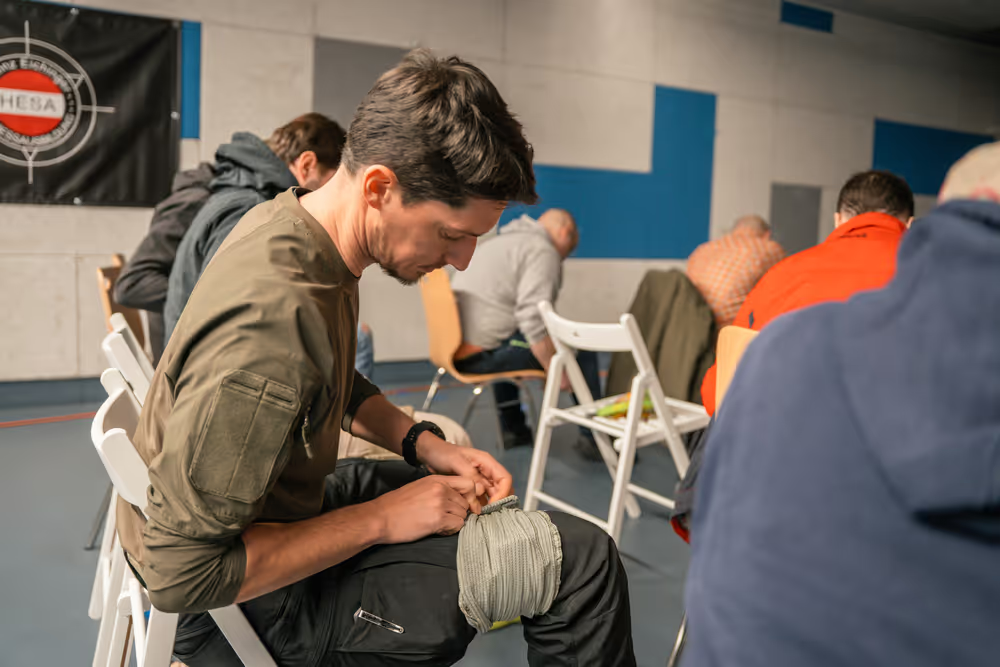
- Apply tourniquet
- Practice woundpacking
- Pressure bandage under stress
- scenario training
- Distribution of roles
Checklist — shooting range emergency
This checklist represents part 1 of a multi-level safety concept for emergencies at the shooting range.
- Stop fire
- Secure weapons
- Make an emergency call
- Stop bleeding
- Keep warm
- Prepare for rescue
FAQ — First Aid shooting range
Is that just for professionals?
No
It is relevant for every Sagittarius.
Is a normal first aid course enough?
A basic course in first aid forms the basis for all further measures, but specialized training is recommended for the shooting range. Specialized training is more useful for shooting ranges.
How long does a shooting range emergency training take?
Usually 4—8 hours, highly practice-oriented.
Conclusion — Safety doesn't end with hearing protection
A shooting range is only as safe as its preparation.
Anyone who has responsibility should:
- Can stop bleeding
- Be able to use tourniquet
- Be able to coordinate rescue
Clear processes and clearly assigned responsibilities help to avoid doubts and uncertainties in an emergency.
Book shooting range emergency training now
Critical Knowledge provides hands-on first aid training specifically for:
- shooting clubs
- Range operator
- security forces
- hunting groups
👉 Watch shooting range training
👉 Request in-house training
👉 Get a non-binding offer
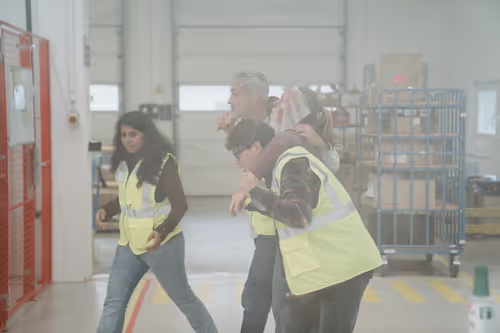
Request a realistic simulation
Transform your emergency training with realistic wound simulations and scenarios to create an intensive and effective learning experience for your team.
Discover our trauma kits
Purchase premium trauma kits, including tourniquets, bandages, and other essential materials for emergencies in challenging environments.
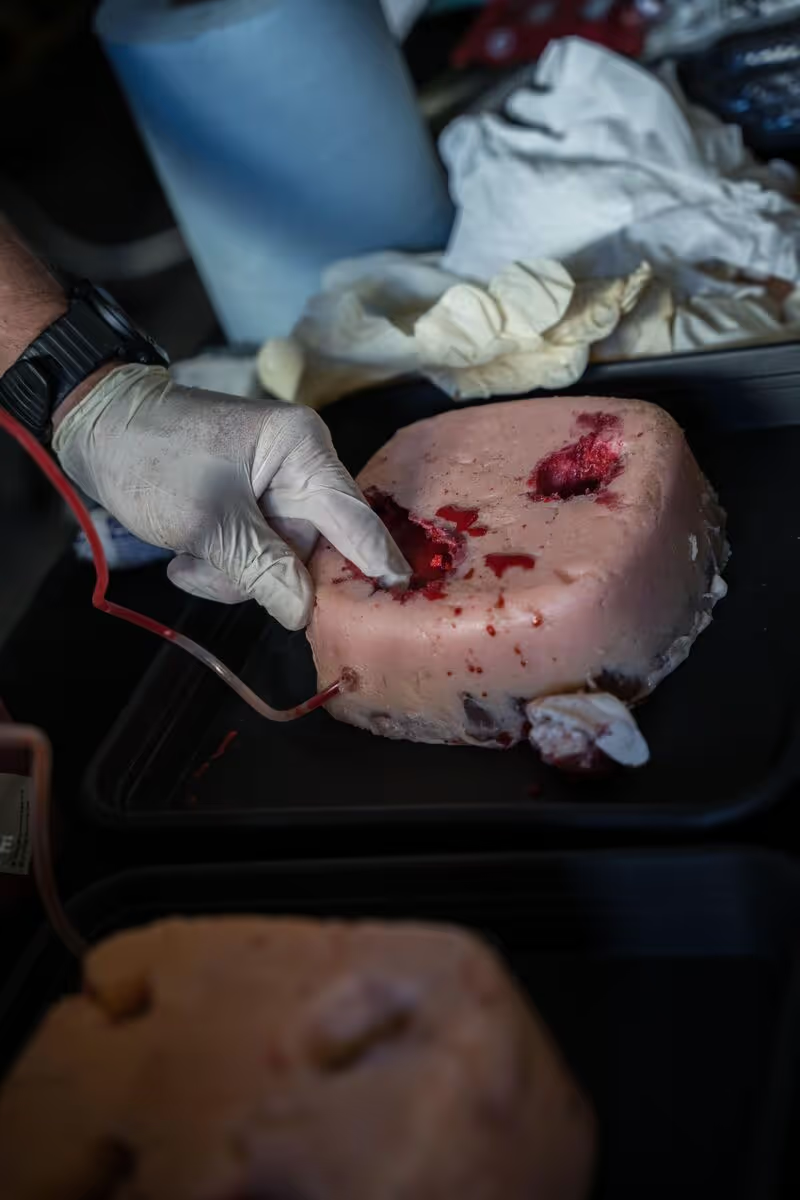
Book your first aid course
Prepare your team for critical situations with hands-on training and real scenarios. Learn how to react quickly in emergencies.