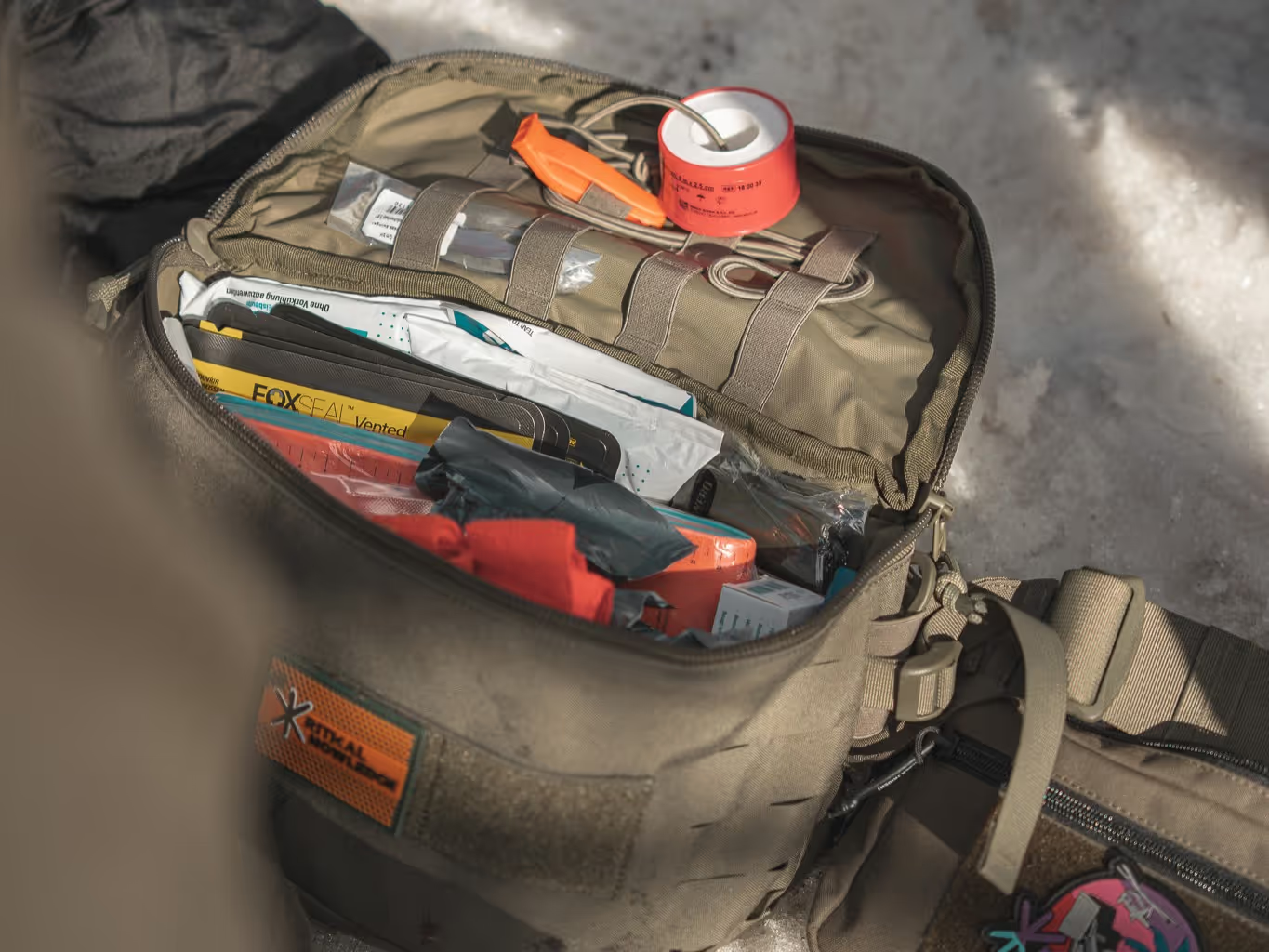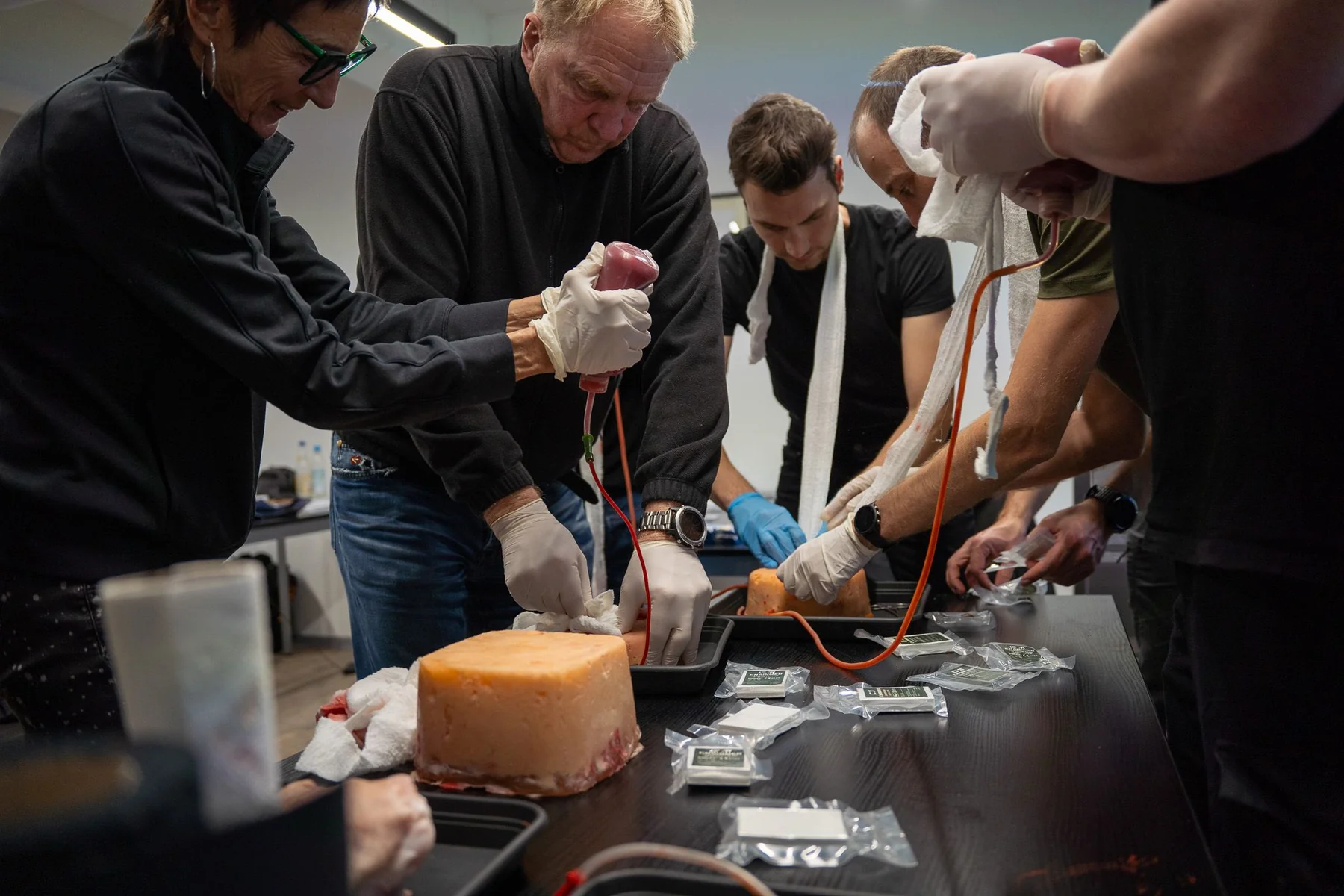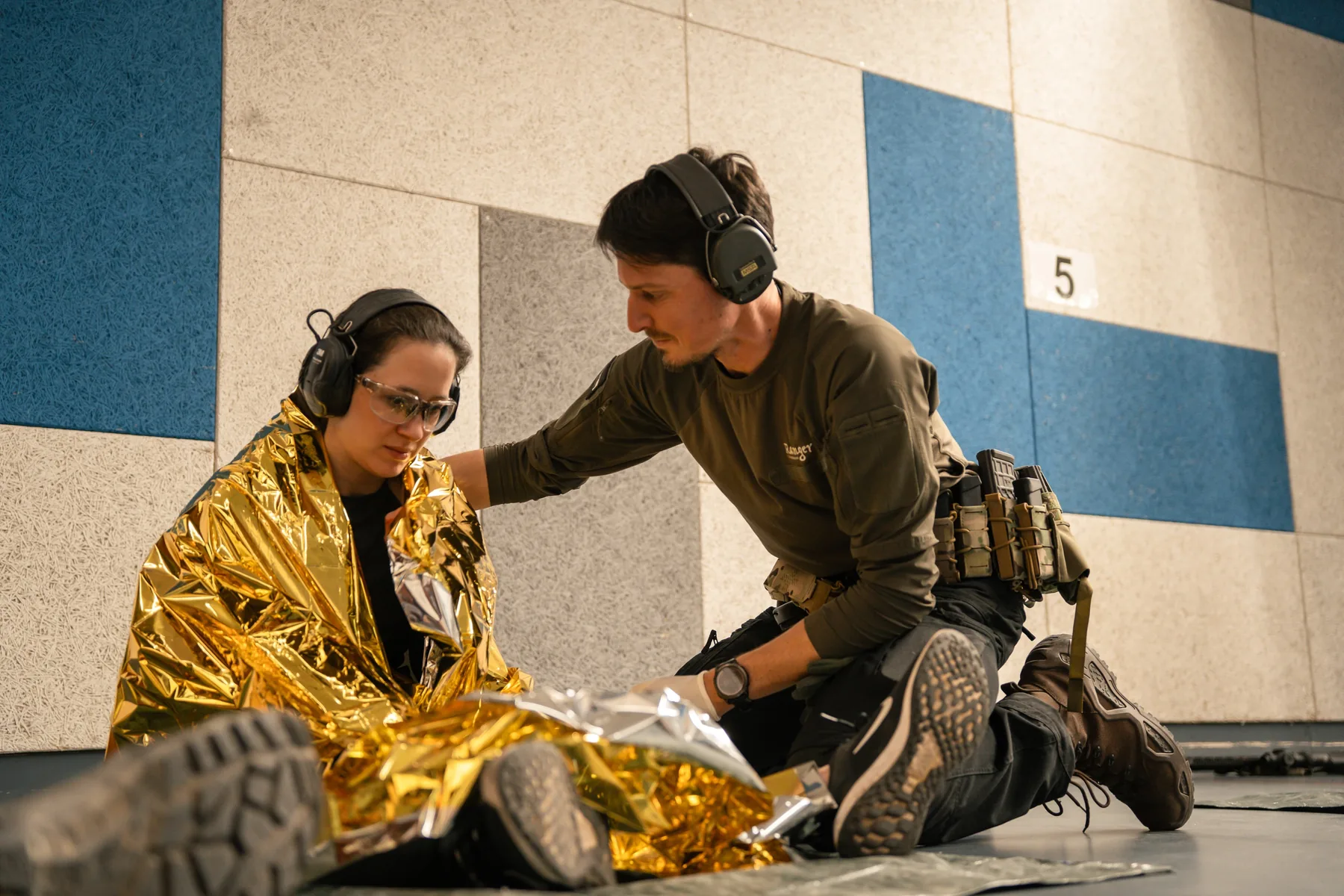

An emergency at work rarely happens — but when it happens, every minute counts. That is exactly why a First Aid Refresher in the Company Not just a “mandatory program,” but a real safety factor.
First-aiders at work are essential for providing first aid in an emergency. Sufficient numbers of them must be available at all times to be able to intervene quickly and save lives in an emergency. The entrepreneur is legally obliged to ensure that first aiders are available for first aid services in at least the following number. The required number of first aiders in the company must be guaranteed at all times. Regardless of the size or industry of the company, adequately trained first aiders should always be available in the company, as they can significantly reduce the severity of injuries and save lives in an emergency.
However, many companies are faced with a typical question:
Is a 4-hour training session enough — or is an 8-hour first aid course more useful in the company?
This article gives you a clear guide to decide which course duration is best for your industry, your team and your risks — including a checklist, practical examples and recommendations.
Why a First Aid Refresher is so important at work
First Aid is not a theory. It is a craft — and you forget a craft without practice.
One Company First Aider Refresher Ensures that employees:
- Remain able to act in stressful situations
- Use life-saving measures safely
- Know clear processes (emergency call, handover, documentation)
- avoid typical mistakes
Regular training and participation in refresher courses are particularly important in order to keep the first aid skills and practical knowledge of company first aiders up to date. The obligation to refresher results from DGUV regulation 1 and the professional association rules. Continuing education for first aiders in the company must be refreshed every two years in continuing education. This is the only way to ensure that first aiders can act quickly and safely in an emergency.
Particularly important: Many people only know first aid from the driving license course — and that was often many years ago.
.avif)
4h or 8h — What's the difference?
In short:
- 4 hours = compact refresher (ideal for low-risk teams)
- 8 hours = complete first aid course in the company (ideal for higher risks & practice-intensive content)
A First Aid Course As well as the First Aid Training In the company, after the stipulations Accident Insurance Institutions and Professional Associations and Consist of Defined Lessons. According to the guidelines of professional associations, continuing education for first aiders must take place at least every two years and usually comprises nine lessons. This training can also be divided into several sections over the course of two years.
Both options can be useful — but not the same for every sector.
Contents of a 4-hour first aid refresher (typical)
One 4h First Aid Refresher Is optimal if:
- The risk of serious injuries is low
- The participants have already completed a course
- You want to repeat the most important basics
The refresher is practice-oriented: First aid measures are practiced together in the group to ensure the current state of knowledge. Participants receive important information on how to act calmly and calmly in every situation. A lot of practice time on puppets or with practice AEDs is planned so that participants learn to remain calm in emergency situations and to help safely.
Typical content (4 hours)
In the First Aid Refresher in the Company, the most important first aid measures are not only taught theoretically, but also practiced in practice in order to strengthen the participants' confidence in action.
- Self-protection & situation overview
- Emergency Call & Rescue Chain
- loss of consciousness/ stable lateral position
- Cardiopulmonary resuscitation (CPR)
- AED (defibrillator) basics
- bleeding (base)
- Wound Care & Pressure Dressing
- Detect shock
- Handover to Emergency Services
Who is 4h ideal for?
- Office/Administration
- Agencies/IT
- Practices without a high-risk environment
- Hotels/Reception
- Retail (depending on risk, particularly with few employees)
The 4h Refresh is particularly suitable for companies with few employees or low risk.
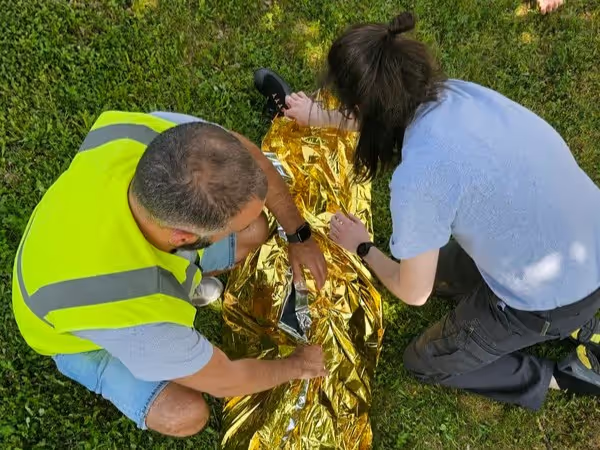
Content of an 8-hour in-company first aid course (typical)
A 8-hour first aid course It is useful if:
- There is a higher risk of injury
- You want to train more practice and scenarios
- You really want to make teams able to act
First Aid Training and First Aid Course may only be carried out at a Training Center or Body Authorized by the Professional Association or Accident Insurance Institution. The DGUV and corresponding regulations define the framework conditions for the training and continuing education of first aiders and first aiders. The costs of the refresher courses are usually covered by the Professional Association or Accident Insurance Fund (Reimbursement of Costs). The German Red Cross and the Hospitallers are known as recognized providers of practical first aid courses and continuing education.
The courses are offered at various locations, for example at work, at school or as public courses, and are aimed at different groups — from companies to educational institutions to individuals. First Aiders and First Aiders are also specifically trained to ensure safety in the company, at school and in other areas. The courses consist of several lessons and may include special training such as the safe use of an Automatic External Defibrillator (AED). Public courses are available for individuals when there aren't enough participants for their own group.
Typical content (8 hours)
The training is practice-oriented: The participants practice in realistic situations on puppets or with practice AEDs in order to bring their first aid measures up to date. In doing so, they receive important information so that they can act safely and competently in an emergency.
In addition to the 4h content, there are:
- More scenarios & stress training
- severe bleeding/ extended bleeding control
- Dealing with amputation injuries (basic)
- Respiratory problems & aspiration
- Injuries caused by machines/tools
- Burns/burns
- medical emergencies (e.g. seizure, stroke, heart attack)
- Transport & storage (convenient)
- professional handover (MIST/ATMIST)
Who is 8h ideal for?
- Crafts & Construction
- Industry/production
- Warehousing/Logistics
- Forestry/ Agriculture
- Security Services
- Events & organizers
- Schools/larger institutions
The 8-hour course is particularly suitable for larger companies with many employees. Here, it is important to carefully plan the number and ranks of first aiders and their proximity to jobs, taking into account operational risks. The training can be carried out for entire groups to ensure that there are enough first aiders and first aiders available in all areas of the operation.
Decision-making aid: Which course duration makes sense for your industry?
So that you don't have to guess, here is a clear guide: The decision to refresher first aid in the company should always be made on the basis of legal requirements and relevant information.
4 hours are usually enough if...
- The environment is low-risk (e.g. office)
- You have little physical work
- You expect primarily medical emergencies (e.g. circulation, fainting)
- You just want a regular refresher in order to specifically refresh your first aid skills and knowledge
8 hours is a better choice if...
- Machinery, Tools, or Heavy Loads Are Involved
- Cuts, Bruises, or Falls Are Realistic
- You have many employees
- You want maximum security
- You Train New First Aiders
- Are you looking for comprehensive training in which participants intensively practice first aid measures
Common mistake in companies: “We're just taking some kind of course”
Many companies book first-aid training at the company because it “kind of belongs.” When choosing the course, the specific risks and operational conditions should be analysed taking into account legal requirements.
The problem:
Without adjustment to the real risk, training remains ineffective.
Exemple:
- In a camp, “stopping bleeding” is more relevant than “sticking a patch.”
- In an office, “heart attack/stroke” is more relevant than “bruising trauma.”
- When it comes to events, “Communication & Rescue Chain” is crucial.
A good Emergency Training in the Company Is always:
- Industry-specific
- practice-oriented
- realistically
- Clearly structured
.avif)
What makes for really good first aid training in a company
1) Practice instead of theory
First Aid is not a presentation. During the first aid refresher in the company, it is important that participants practice the most important first aid measures in practice in order to consolidate their knowledge and be able to use them safely in an emergency.
The most important question is:
“What can I really do after the course? ”
2) Scenarios that fit reality
- Fall in the Stairwell
During first aid refresher at work, typical emergency situations, such as a fall in a stairwell, are practiced realistically. Here, participants learn how to act prudently in such a situation and use the right first aid measures to protect the life of the person concerned. - Cut injury with severe blood loss
Cuts involving severe blood loss are also situations that can occur in everyday business life. The training teaches how first aiders react quickly and effectively to stop blood loss and pass on further information to emergency services. - Collapse/circulation
A sudden collapse or circulatory collapse is another situation that is addressed in training. The participants practice how to provide first aid in such cases and apply the vital knowledge. - Accident in the workshop
Accidents in the workshop are among the most common situations that can occur in a company. Refreshing first aid skills ensures that employees react correctly in an emergency. - Incineration/ Corrosion
Burns and burns are also emergency situations that are dealt with in a practical way as part of the training. Participants learn how to provide first aid in such cases and how to protect the health of those affected.
3) Clear processes & roles in the team
Who does:
- Emergency call?
- Hedging?
- First measures?
- documentation?
- Handover?
It is important that the ranks and roles of first aiders in the team are clearly defined. This ensures that every employee in the company knows who is taking on which tasks and in which order and how the cooperation between the various groups and workplaces works.
4) Repetition under stress
This is the only way to turn knowledge into action — particularly practicing first aid measures under time pressure is important in order to remain able to act in an emergency.
In-house or external course — which is better?
Many companies ask:
Should we send our employees to an external course or should we train them in-house? First-aid refresher in the company can take place at various locations — either directly in the company (in-house course) or as public training at an external location. This allows you to flexibly decide which location and course format (in-house or public) best suits your group and the needs of your employees.
Benefits of an in-house first aid course
- Training in a real environment
- less downtime
- more practice (because there are fewer outgroups)
- Team training instead of individual participation
- Scenarios can be adapted in real life
When an external course makes sense
- Very small teams (1-3 people)
- Individual groups or individuals, if there are not enough participants for their own group in the company — public courses are available for this
- Not a suitable space in the company
- Individual Employees as a Supplement
Checklist: Which first aid refresher is right for you?
4h — recommendation if...
- Office/Administration
- low risk of accidents
- Pure Refreshment Required
- Focus on CPR, AED, emergency call, basics
8h — recommendation if...
- Production, workshop, construction, logistics
- Higher probability of accidents
- more Practice & Scenario
- Focus on bleeding control + injuries
Premium recommendation (critical knowledge)
If you:
- 8 hours of training
- And also integrates a scenario module
... you get the biggest learning effect.
.avif)
FAQ — Common questions about first aid refresher in the company
How often should you brush up on first aid in the company?
Recommendation: Training for company first aiders must take place every two years in accordance with the guidelines of the DGUV, the professional association and the corresponding regulations. The obligation to refresh results from DGUV regulation 1 and the professional association rules — particularly in teams with higher risks.
Is a 4-hour course officially sufficient?
That depends on your goal: For full-fledged first aid training in the company, advanced training of 9 lessons (45 minutes each) is required, which must be refreshed every two years. This training may only be completed at a training center authorized by your accident insurance institution, such as the German Red Cross or the Hospitallers. Only then will participation be officially recognized. A mere refresher in a shorter period of time does not meet the requirements of the professional association.
Can content be adapted to our industry?
Yes — that is exactly the most important lever for effectiveness.
Can we combine several departments in one training?
Yes, useful when faced with similar risks. If there are very different risks, it is better to separate them.
What about psychological safety after emergencies?
Good training also takes into account communication, team roles, and follow-up.
Conclusion — 4 hours or 8 hours?
If you just want to repeat the basics:
4 Hour First Aid Refresher Enough
If you want real security of action — especially in high-risk industries:
8-hour first aid course in the company Is the better choice.
The most important rule:
The higher the risk, the more practice and scenario you need.
.avif)
Request in-house first aid training now
Critical Knowledge offers practical first aid training for companies — as a 4-hour refresher or as an 8-hour intensive training session.
We train:
- textured
- Close to Reality
- medically based
- Adapted to your industry
👉 Request in-house training now
👉 Get a non-binding offer
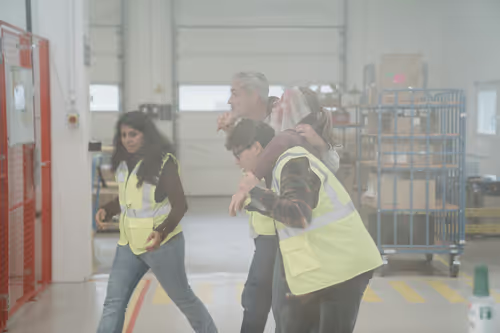
Request a realistic simulation
Transform your emergency training with realistic wound simulations and scenarios to create an intensive and effective learning experience for your team.
Discover our trauma kits
Purchase premium trauma kits, including tourniquets, bandages, and other essential materials for emergencies in challenging environments.
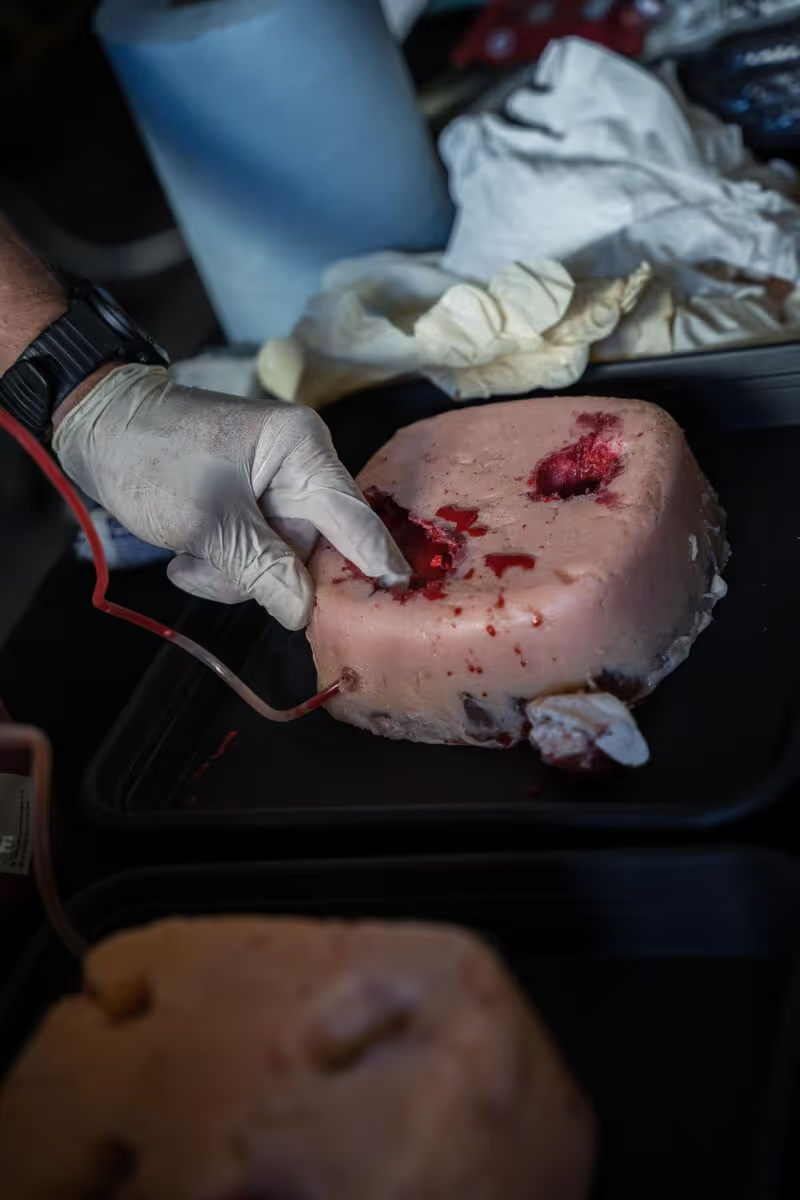
Book your first aid course
Prepare your team for critical situations with hands-on training and real scenarios. Learn how to react quickly in emergencies.