
An IFAK can save lives — but only if it put together correctly is. Choosing and using an IFAK correctly is crucial for your safety, particularly in emergency situations where quick and effective help can be vital.
Many people buy a first aid kit or a so-called trauma kit, put it in their backpack or in the car — and believe they are “prepared” with it. It is important to know that an IFAK is designed for various people or groups of people — such as individuals, families, police or hunters — in order to be able to provide quick and targeted assistance in emergency situations.
The problem:
An IFAK is not a decorative product. It is a system.
And a system only works if:
- the content is useful
- The order is correct
- You have trained the application
- the kit is regularly checked
In this guide, you'll get:
- The complete IFAK checklist
- Recommendations for various uses
- typical mistakes
- and clear instructions on how to pack your IFAK sensibly so that you are optimally prepared in emergency situations
What is an IFAK?
IFAK stands for:
Individual First Aid Kit
So: personal first aid kit/trauma kit.
An IFAK is not the same as a classic first aid kit.
Difference between first aid kit and IFAK
A normal first aid kit is on:
- small wounds
- plasters
- abrasions
- minor cuts
laid out.
An IFAK is on:
- life-threatening bleeding
- severe trauma
- Outdoor/deployment scenarios
laid out.
Who is an IFAK useful for?
An IFAK is useful for anyone who:
- Are out and about
- Take responsibility
- work with tools, weapons, or machines
- are regularly in remote areas
The content of IFAK should always be adapted to the respective purpose, the individual risk environment and personal abilities.
Typical target groups
- Hunters & Forestry Staff
- Sport shooters/shooting range
- outdoor sports enthusiasts (hiking, mountain biking, climbing)
- security forces
- Companies/Workshops/Construction sites
- Individuals (car, home, travel)
The 3 most important goals of an IFAK
An IFAK is not an “all-in-one hospital.”
It has three core tasks:
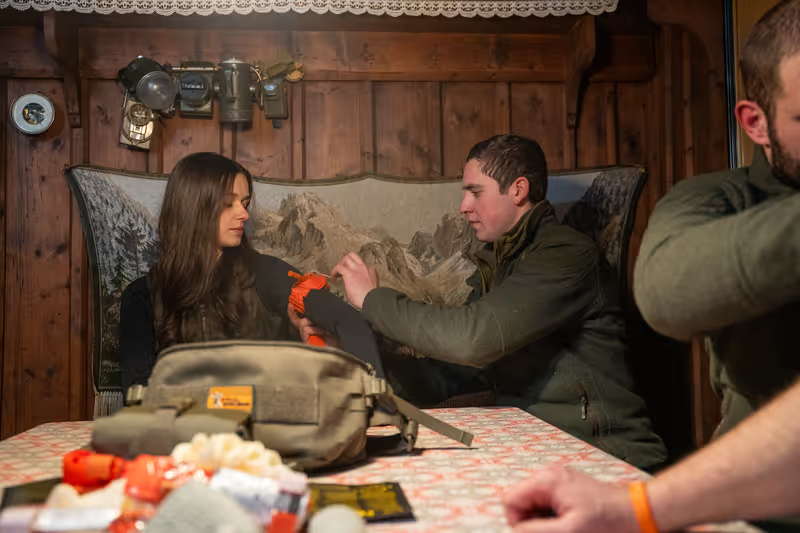
1) Stop bleeding
Life-threatening bleeding is one of the most common preventable causes of death outside the hospital. A combat application tourniquet is a central tool for rapid hemostasis in the event of serious injuries and is considered an indispensable part of any tactical emergency equipment, in particular for hunting, outdoor and military applications. For example, the WERO MED-X Hunter Medic Pack contains both a Combat Application Tourniquet and an Emergency Bandage to effectively treat severe bleeding.
2) Secure airways (Basic)
Don't intubate — but understand the basics.
3) Prevent hypothermia
Hypothermia is a huge killer when it comes to trauma.
IFAK content — the complete checklist
Here is a practical overview of the IFAK equipment. The equipment of the Individual First Aid Kit should always be adapted to the respective location and the prevailing conditions there.
Mandatory (minimum) — IFAK checklist
These items should be included in every IFAK to ensure complete and high-quality equipment. The most important articles include in particular sterile compresses and emergency bandages as wound dressings:
- 1× tourniquet (CAT Gen7 or SOFTT-W)
- 1× Emergency bandage/pressure bandage (as wound dressing)
- 1× sterile compresses (or emergency dressing, as wound dressing)
- 1× Nitrile Gloves
- 1× Emergency blanket
- 1× Bandage scissors
- 1× Permanent marker (time tourniquet)
That is the basis.
Optimal (Recommended) — Trauma Kit Compilation
If you are really serious about your IFAK and want to ensure optimal wound care for serious injuries:
- 1× hemostatic gauze (e.g. QuikClot)
- 1× additional wound tamponade gauze
- 1× Chest Seal (for penetrating injuries)
- 1× Tape (fabric tape)
- 1 x triangle cloth/fixing tape.
- 1× CPR Face Shield (optional)
Optional — depending on use
For hunting, forestry, outdoor or shooting range: Depending on the area of application, optional aids can be useful as supplementary medical equipment in order to be able to react quickly and effectively in an emergency.
- blister patch
- pain reliever (private, only legal/permitted)
- small tweezers
- disinfectant wipes
- Tick pliers
- flashlight
- replacement gloves
What does NOT belong in an IFAK?
A big mistake is “too much.”
Many iFaks are full of:
- Paving
- mini associations
- 10 rolls of gauze
- homeopathic stuff
- Things you never need
Not everything that is included in other first aid kits belongs in IFAK — it should only contain what is necessary for emergency situations.
An IFAK is not a first aid kit.
rule
If you haven't trained it → get out with it.
If it's not life-saving → optional.
The most common mistakes with IFAK
Mistake 1 — buy cheap tourniquets
A tourniquet is not an Amazon gadget.
The price should not be the main criterion when buying a tourniquet, as a low price is often associated with poor quality. Cheap copies won't crack, break, or hold.
Mistake 2 — Don't train Woundpacking
Woundpacking looks easy.
In real life:
- gore
- stress
- poor visibility
- time pressure
It won't work without training.
Mistake 3 — wrong order in the kit
If you only find your tourniquet after 2 minutes, it's too late.
Mistake 4 — Never check the kit
Gauze, gloves, bandages have durability.
An IFAK must be checked.
How do you pack an IFAK correctly?
Pack order (practical)
Pack it the way you need it:
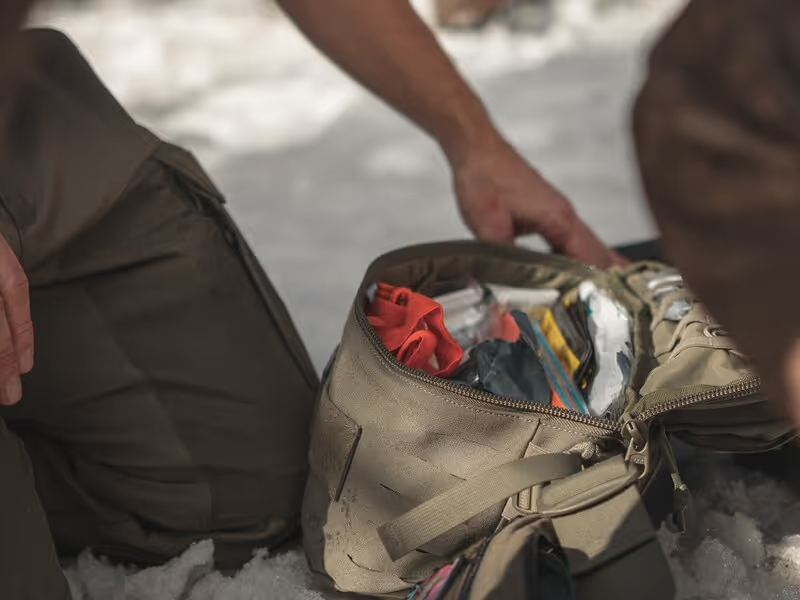
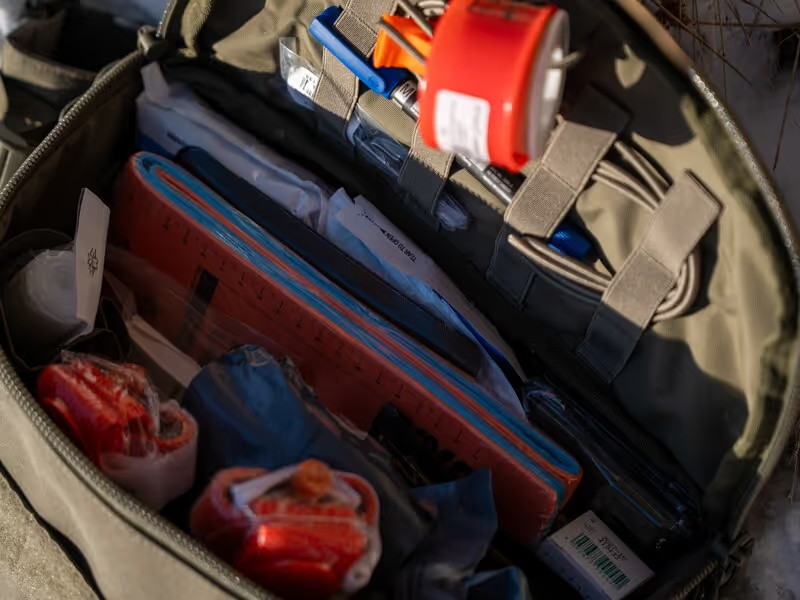
- Tourniquet immediately accessible (outside or above, ideally attached to one side of the IFAK to ensure quick access)
- Pressure bandage (place on an easily accessible side or surface)
- Woundpacking material
- gloves
- Emergency blanket
- accessories (marker, tape, scissors)
Access under stress
An IFAK must work:
- one-handed
- In the dark
- under stress
- with gloves
Especially in an emergency, it is crucial that the IFAK is ready for use quickly and reliably.
If that doesn't work, it's not a real IFAK.
IFAK for various scenarios
An IFAK (Individual First Aid Kit) is a compact first aid kit specifically designed to provide quick and effective help in various situations. It can be individually adapted to provide optimal support in various emergency situations — from outdoor activities to urban areas of use.
IFAK for Hunters & Forst
Typical risks:
- cuts
- fall injuries
- Gunshot wounds, in particular due to the use of firearms while hunting
- remote areas, such as forests, where rapid supply in emergencies is particularly challenging
- hypothermia
Especially in the forest, injuries can quickly become a serious emergency, as help is often not immediately available. A well-equipped IFAK is therefore essential for hunters and forest workers to be able to provide first aid quickly and effectively in such situations.
Recommended:
- tourniquet
- hemostatic gauze
- Emergency blanket
- extra tape/fixation
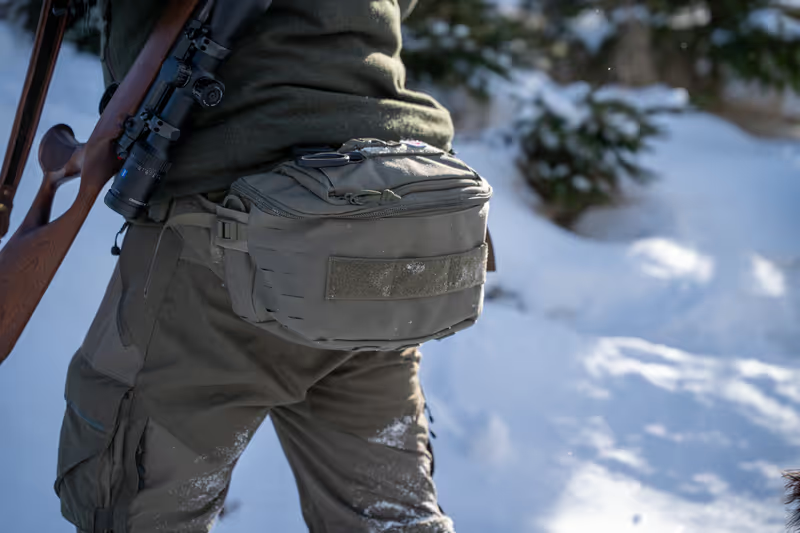
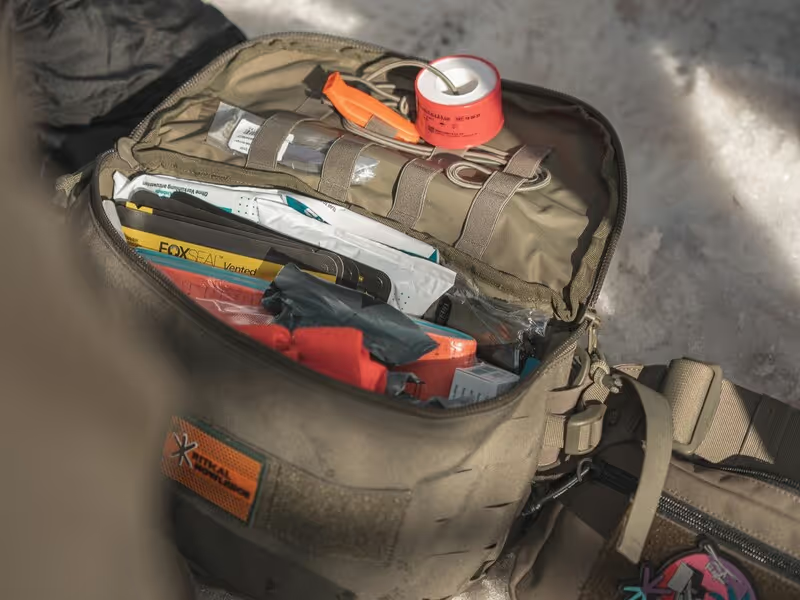
One example of an IFAK developed specifically for hunters is the WERO MED-X Hunter Medic Pack. It contains tactical emergency equipment for minor to severe injuries during hunting, is compact and lightweight and can be easily attached to a belt or backpack thanks to the MOLLE system.
IFAK for shooting range
Risks:
- gunshot wounds
- penetrating trauma
- Stresslage
Safety is a top priority when handling firearms and at the shooting range. A well-equipped IFAK makes a decisive contribution to safety and helps to act quickly and effectively in an emergency.
Recommended:
- tourniquet
- Woundpacking
- pressure bandage
- Chest Seal
- Marker + scissors
IFAK for outdoor & travel
Risks:
- falls
- cuts
- hypothermia
- Long time until rescue
- abrasions, insect bites (common during outdoor activities and in nature)
Recommended:
- tourniquet
- pressure bandage
- Emergency blanket
- blister patch + tick aid
- Patches and bandages for abrasions, cuts and insect bites (important first aid for outdoor activities)
- Light weight and robust materials are crucial for longer outdoor tours.
- Mounting options on a climbing harness, backpack or belt (e.g. with Velcro or robust zipper) allow quick access in an emergency.
- Suitable kits: Tatonka First Aid Kit (especially for outdoor tours), Ortlieb Regular First Aid Set (waterproof, ergonomic bag), Care Plus Basic First Aid Set (well equipped, easy to use).
- A good outdoor IFAK should be prepared for all eventualities, as nature places special demands on equipment and initial care.
Buy IFAK — what to look for?
Product quality
- Brand quality (e.g. CAT, SOFTT-W, Celox/Quikclot)
- High-quality materials: IFAK pouches are usually made of robust Cordura fabric, which provides protection against wear and tear
- sterile packaging
- clear shelf life
- no fake products
bag/pouch
Pay attention to:
- robust workmanship
- various mounting options such as MOLLE system, loops or Velcro to flexibly attach the bag to backpacks, vests or belts
- easy opening
- Velcro for quick and secure attachment, particularly practical in an emergency
- Example: The TT IFAK Pouch VL is specially designed for easy Velcro attachment and can be mounted directly on Velcro surfaces
- reasonable interior design
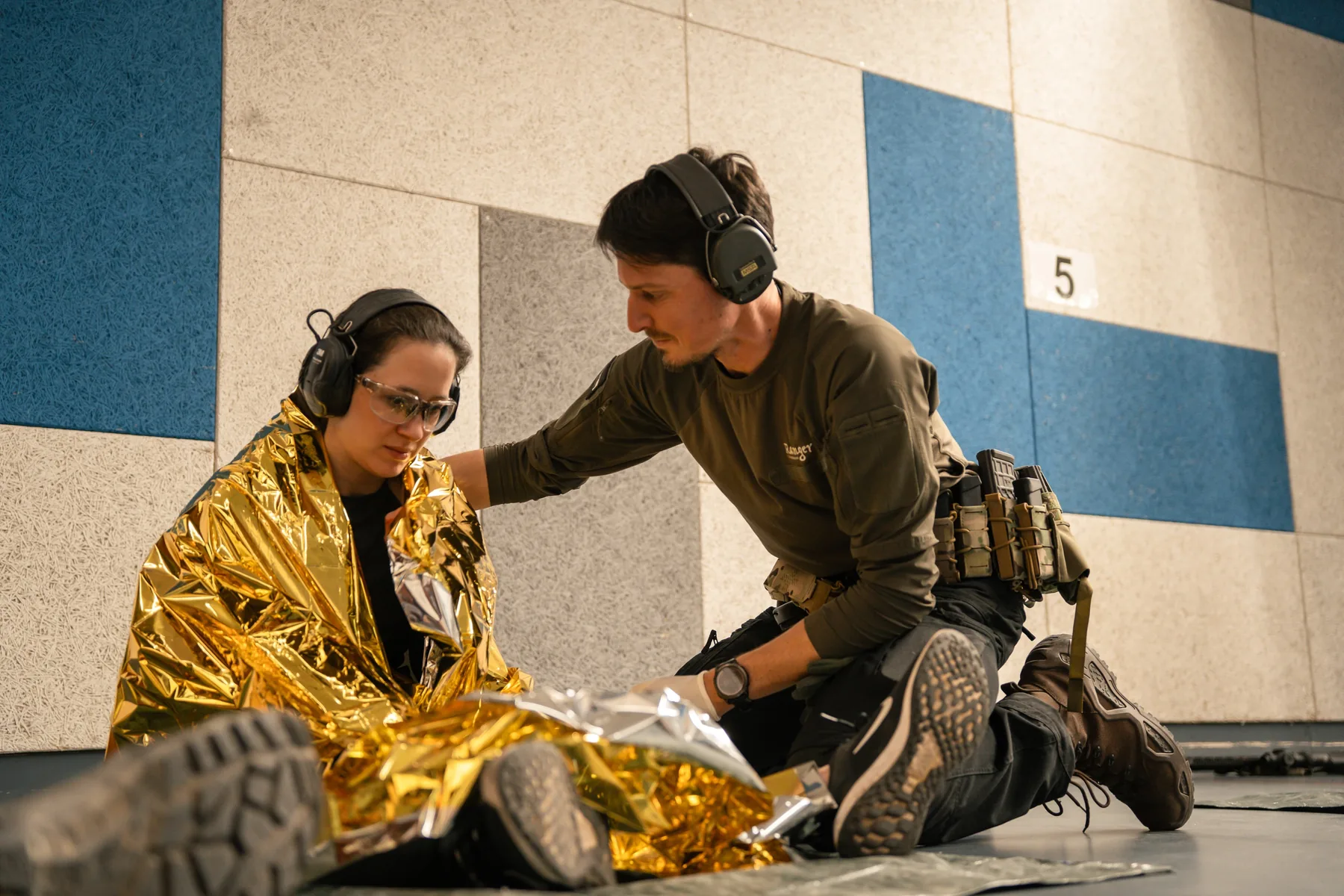
An IFAK does not replace training
The most important point:
An IFAK only saves lives if you can use it.
That's why 2 things go together
That's exactly what there is for:
- Stop the Bleed Training
- Trauma Basics
- Jagd & Forst Lifesaver
- Shooting Range Lifesaver
With the right training and the right equipment, you are optimally prepared for every occasion so that you can act quickly and effectively in an emergency.
Quick check — IFAK checklist for saving
Here is a compact overview that covers everything important for an IFAK:
- tourniquet
- pressure bandage
- sterile compresses
- hemostatic gauze (recommended)
- gloves
- shears
- markers
- Emergency blanket
- Tape
- Chest Seal (depending on risk)
Conclusion — your IFAK is your backup system
A good IFAK is:
- minimally
- high quality
- textured
- ready for use
Especially in an emergency, a reliable first aid kit is essential to ensure initial care directly on site.
And it is no substitute for skill.
Combine IFAK & Trauma Training now
If you don't just have equipment, but really want to be prepared:
👉 Watch Stop the Bleed course
👉 Book trauma training
👉 Discover IFAK bundles in the shop
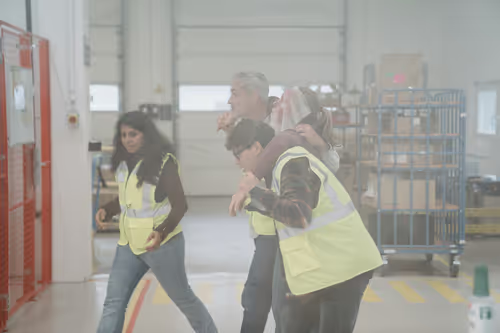
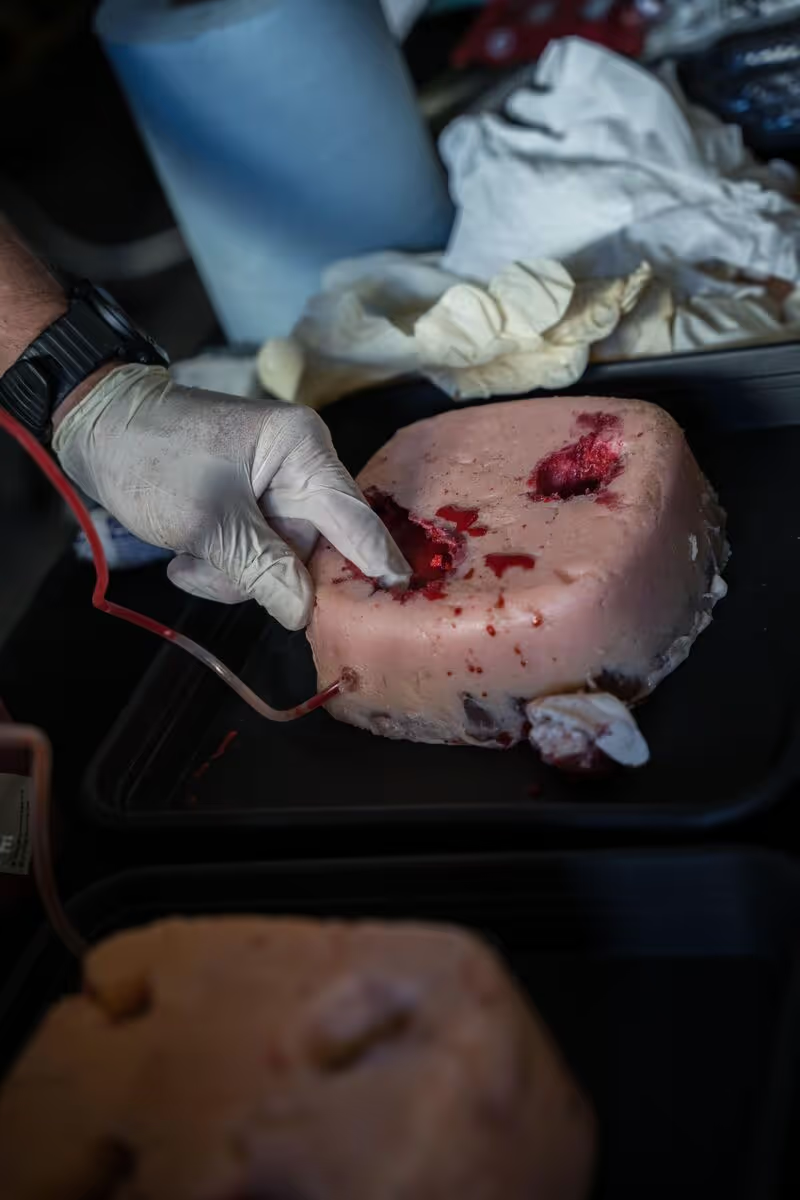
Request a realistic simulation
Transform your emergency training with realistic wound simulations and scenarios to create an intensive and effective learning experience for your team.
Discover our trauma kits
Purchase premium trauma kits, including tourniquets, bandages, and other essential materials for emergencies in challenging environments.
Book your first aid course
Prepare your team for critical situations with hands-on training and real scenarios. Learn how to react quickly in emergencies.

.avif)