

An emergency in the area is different from an emergency in the city.
No ambulance in 5 minutes. There's no hospital around the corner. No quick access to professional help.
Hunting accidents can also happen in the area of hunting despite all precautionary measures — it is therefore crucial to react quickly and correctly in an emergency.
That is precisely why First aid for hunters Not “nice to have”, but an elementary part of responsibility.
In this guide, you'll learn:
- Which emergencies are really common in forests and areas
- Like you a Treat gunshot wound can (first measures)
- Like you a Stopping heavy bleeding
- When a tourniquet is necessary
- How to prevent hypothermia
- How to coordinate the rescue chain in the forest
- Which equipment is useful (IFAK, tourniquet, accessories)
- Why suitable footwear and protective clothing are essential to prevent accidents when walking on rough terrain
- that a first aid kit is an essential part of hunting equipment and should be checked before each use
- Why hunters should always inform someone about their whereabouts and the planned return
👉 If you really want to be able to do these things safely, we recommend a practical Hunting & Forestry Emergency Training or a special seminar for hunters — because in an emergency, routine counts, not theory.

Why first aid in the forest is so different
In urban emergencies, the most important factors are:
- quick emergency call
- short journey time
- professional care in a short time
In the area of hunting, on the other hand, it is crucial to be prepared for emergency situations, as hunters often travel in rough terrain and far from roads. Special first aid courses for hunters therefore focus on the particular dangers and challenges that can arise in such situations.
The three biggest differences in the area
- zeit: Rescue takes longer
- entry: Emergency personnel find you harder
- vicinity: cold, wetness, darkness, terrain
That means:
The first aider must bridge — and stabilize — for longer.
Especially in such emergency situations, the right behavior is crucial to ensure the safety of everyone involved and to initiate life-saving measures. Safety in action is strengthened through practical exercises and targeted training in the first aid course for hunters.
Preparation and prevention — identify risks, avoid emergencies
Good preparation is the key to traveling safely in the area and avoiding emergencies from the outset. Every hunter is responsible — for himself, for others and for the game. Anyone who deals with the typical hazards in the area in advance and has the right equipment with them can prevent or alleviate many critical situations. A full first aid kit, a charged cell phone battery and an emergency call plan are just as important as hunting equipment itself.
What you should do before hunting day
Preventive measures in the area
The most common emergencies in hunting & forestry
Many immediately think of gunshot wounds.
Yes, they are critical — but in practice, there are several typical scenarios.
More than 50% of hunting accidents are caused by falls, particularly from a raised seat. High-rise construction is also a typical source of danger.
An example: In one case, a hunter falls while descending from a raised seat, sustaining typical injuries such as broken bones, bruises or head injuries. Such situations require quick and correct action.
Special first aid courses for hunters are tailored to these accident statistics and the most common injury patterns such as falling from a raised seat, gunshot wounds and animal bites.
Typical hunting and forestry accidents
- Knife cuts
- lacerations
- Injuries caused by chainsaws or tools
- Fall in the field
- Injuries due to branches or wood splinters
- shooting accidents
- circulatory collapse
- heart attack
- hypothermia (even after an injury!)
- frostbite
- heatstroke
- allergic reactions (e.g. insect bite)
Hunters should be aware of the risks of hypothermia and heatstroke as they can be life-threatening.
First priority: Self-protection & weapons safety
Why this is so important
In the event of a hunting accident, the situation can be confusing.
Weapons, ammo, dogs, terrain — all of this increases the risk.
Before you help:
- Secure a weapon
- Check the area
- Observe self-protection
- Use gloves (if available)
Coordinating the rescue chain in the forest
Emergency call in the precinct — the problem
Many underestimate:
It is more difficult to call an emergency in the forest than in the city.
- no clear street name
- poor reception
- unclear location
- difficult access roads
When making an emergency call, the rescue coordination center needs as precise information as possible about the scene of the accident and the situation in order to optimally coordinate the rescue operation.
That's how you do it right
- Send GPS coordinates (e.g. WhatsApp, Google Maps)
- Name forest road numbers or hunting lodges
- Define meeting point
- Send a person ahead as a referee to initiate the rescue workers at the meeting point
Note
“Emergency call + coordinates + referrer”
It saves time.
Stop bleeding — the most important skill in the area
Heavy bleeding is the most dangerous emergency because:
- It can quickly be fatal
- It often has to be bridged longer outside
- Cold and stress worsen blood clotting
A tourniquet is an important tool for controlling heavy bleeding and can save lives when used correctly. It should be used for severe, life-threatening bleeding when other methods such as elevating the injured part of the body and applying a pressure bandage are not sufficient. When applying a tourniquet, it should be noted that the surrounding tissue must be protected, as using it for too long or improper may result in tissue damage.
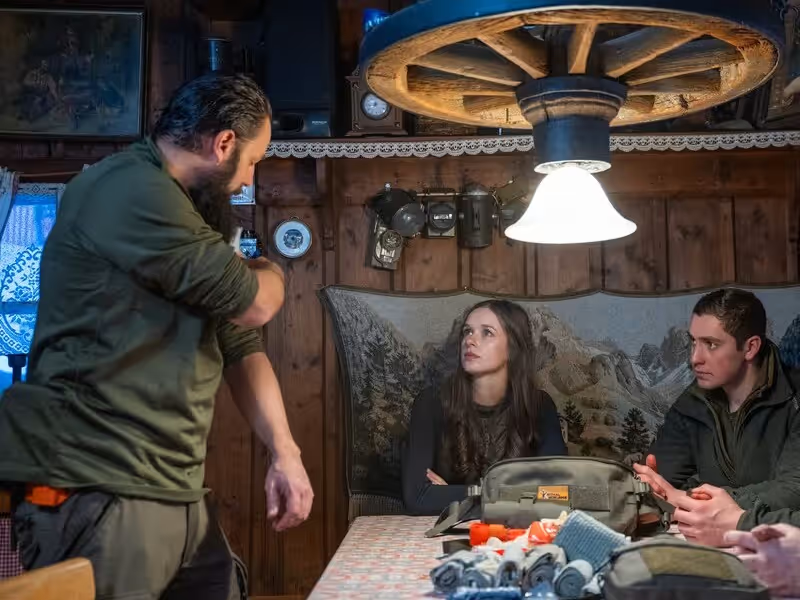
Gunshot injury first aid — what you really need to do
Important: You don't need a diagnosis. You need structure.
In the event of an accident in the area, it is crucial to check the life functions of the injured person and to care for him until further help arrives. If there is an acute threat to life, action must be taken immediately, for example through cardiopulmonary resuscitation. Do not abandon the injured person unless there is an immediate threat to your own safety. In the event of serious injuries, a doctor or emergency services should be alerted immediately to ensure professional medical care.
1) Establish security
- Secure a weapon
- Secure location
- Self-protection
2) Start bleeding control
Gunshot wounds often bleed profusely. Wound care is particularly important in such acute emergency situations to stabilize the injury site and prevent further complications.
You have three options:
- Use tourniquet (arms/legs) — However, a tourniquet should only be used for life-threatening bleeding when other methods are not sufficient to stop bleeding.
- Woundpacking (groin/armpit)
- Pressure bandage (if controllable)
Life-saving measures in the first aid course for hunters also include a stable lateral position, the correct handling of shock conditions and the immediate initiation of cardiopulmonary resuscitation in the event of a cardiovascular arrest.
3) Prevent shock & hypothermia
After blood loss, body temperature drops rapidly.
Use tourniquet — when is it necessary?
A tourniquet is not an “extreme tool.”
It is modern first aid for life-threatening bleeding and should only be used when other methods of stopping bleeding are not enough. When applying a tourniquet, it should be noted that tissue damage may occur to the surrounding tissue, especially if used improperly or for too long.
When should you use a tourniquet
- severe bleeding in the arm or leg
- Bleeding squirts/pulsates
- Bleeding cannot be controlled quickly
- Stress/Darkness/Terrain
Put on the tourniquet correctly (short guide)
- Place high on the arm/leg (“high and tight”)
- Tighten the band
- Turn windlass until bleeding stops
- secure
- Note the date
- Don't loosen
Common mistakes
- too loose
- too deep
- Relaxed again too soon
- incorrect use in case of harmless bleeding
Woundpacking/Wound tamponade for deep injuries
For injuries in:
- ledge
- armpit
- neck base
... a tourniquet is not possible.
Then you need:
Woundpacking (wound tamponade).
step by step
- Expose wound
- Find a bleeding center
- Stuff gauze deeply
- Maintain constant pressure (at least 3 minutes)
- Then fix (pressure bandage)
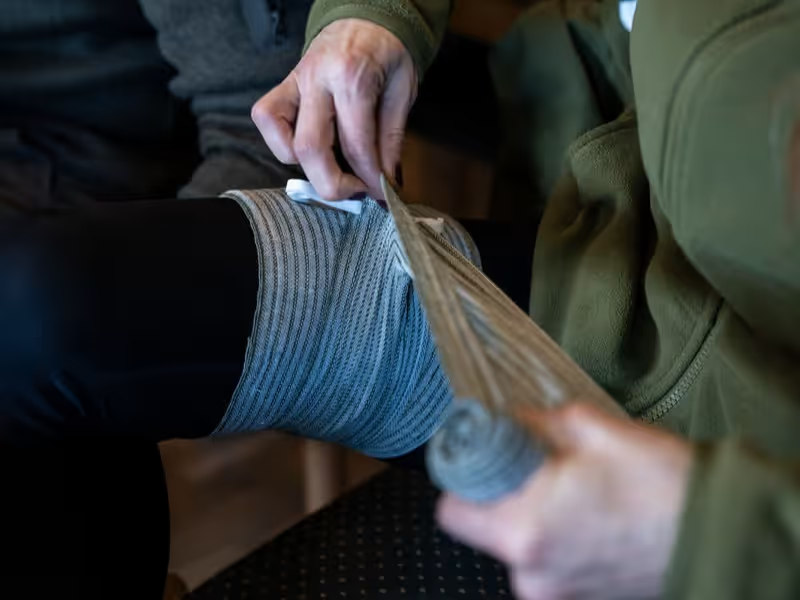
Apply pressure bandage — the basis for cuts
Many hunting accidents occur as a result of:
- knives
- blade
- tool
- chainsaw
Cuts in particular occur frequently in the area and should be treated quickly and correctly to avoid complications. Special first aid courses for hunters therefore cover not only the treatment of cuts, but also injuries such as falling from a raised seat, gunshot wounds and animal bites.
A clean pressure bandage is then essential.
step by step
- Put on a compress
- Build up pressure
- Fix tightly
- Control: does bleeding stop?
- If necessary, add a second bandage on top
Preventing hypothermia — the underrated killer
Many believe:
“Hypothermia only happens at sub-zero temperatures. ”
That is wrong.
Hunters should also be aware of the risk of frostbite and heat stroke, as these can be life-threatening, just like hypothermia.
After an injury, hypothermia can occur as a result of:
- blood loss
- shock
- wet clothes
- cold ground
- wind
- long wait for rescue
Why hypothermia is so dangerous
Hypothermia worsens:
- blood coagulation
- Circulatory stability
- chances of survival
Emergency measures against hypothermia
- insulate (floor!)
- keep dry
- Store sheltered from wind
- Thermal blanket/ emergency blanket
- active heat (when available)

Technology and first aid — digital assistants in the area
Modern technology can be a lifesaver in the area. Digital helpers such as emergency call apps and GPS trackers are now an integral part of the equipment of many hunters. They ensure that help can be organized quickly in an emergency — even in remote areas where cell phone reception is weak and orientation is difficult.
Emergency call apps & GPS trackers
First Aid Scenario Training — Why Practice Is Crucial
Everything in the precinct happens under stress:
- gore
- obscurity
- coldness
- terrains
- time pressure
- epinephrine
That is why it is not enough to “know” first aid.
You must them can.
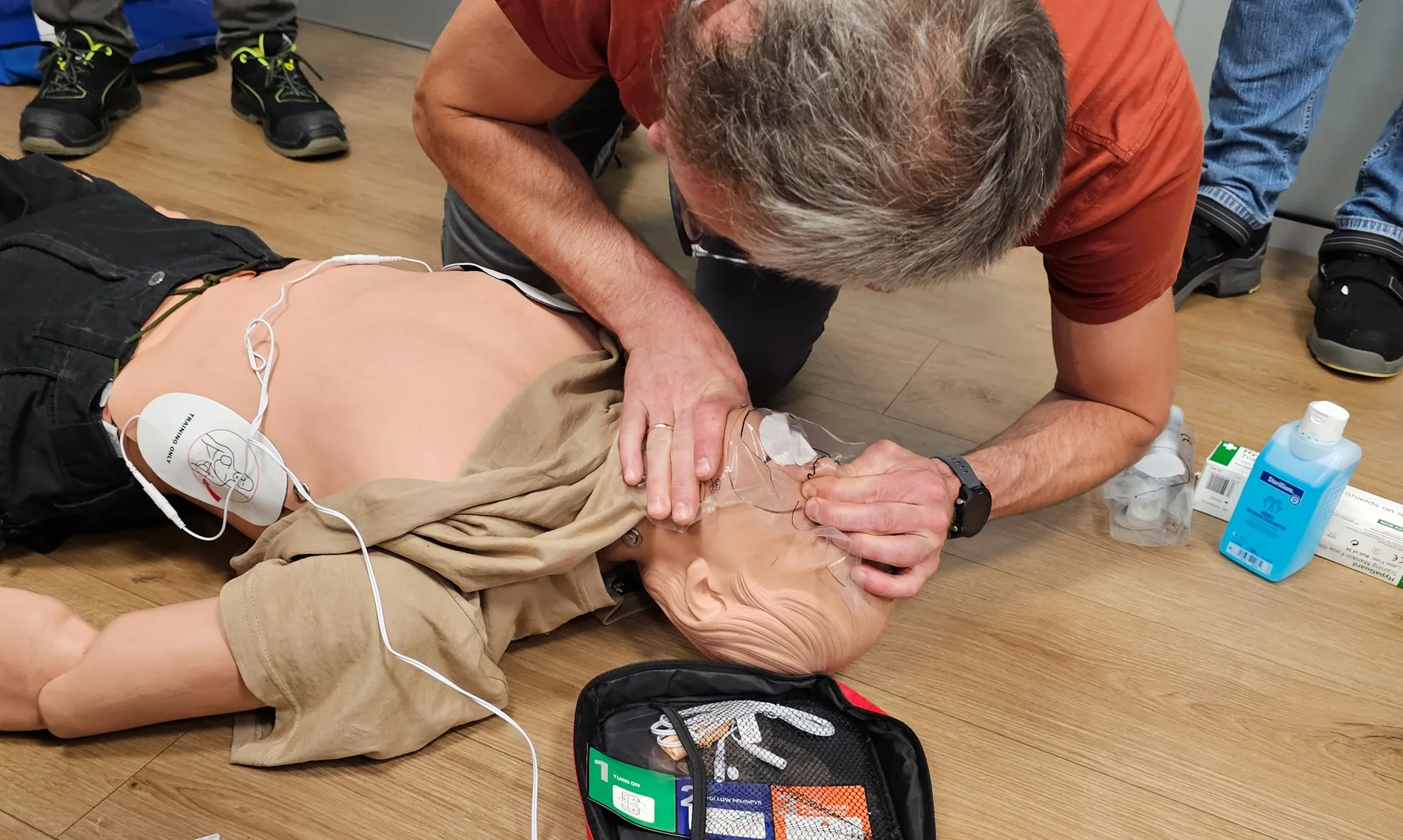
A hands-on First aid course for hunters trained through systematic, realistic exercises Targeted the Safety of action in real emergency situations. The high level of practical experience in the course helps you to act correctly even under stress and to make decisions quickly. Good first aid training increases the safety of hunters and their companions.
Such a course trains:
- Stop bleeding
- Apply tourniquet
- Woundpacking
- Rescue chain in the forest
- hypothermia management
- Handover to emergency services
Which equipment is really useful for hunters?
Minimal (always with you)
- tourniquet
- Compresses/emergency bandage
- gloves
- Emergency blanket
Recommended (IFAK)
- tourniquet
- hemostatic gauze (for woundpacking)
- Emergency Association
- Tape
- shears
- Marker (note time)
- thermal insulation
Most important point
Equipment is no substitute for training.
But training without equipment is also incomplete.
Checklist — Emergency in the area (short version)
1) Save
- Secure a weapon
- Self-protection
- Check location
2) Alert
- emergency call
- GPS coordinates
- Organize referrers
3) Stop bleeding
- Tourniquet/Woundpacking/Pressure bandage
4) Keep warm
- prevent hypothermia
- Insulate floor
- windscreen
5) Prepare handover
- What happened
- When happens
- Which measures
- state
FAQ — First Aid for Hunters & Forests
Is the training just for hunters?
No
It is also ideal for forest personnel, outdoor guides, farmers and anyone who is traveling far away from rapid rescue.
Do you have to have previous medical knowledge?
No
The course is practice-oriented and structured.
What is the biggest mistake in the area?
Lose time.
Hesitate.
Or don't have a clear structure.
Is normal first aid enough?
For many scenarios: no.
In the precinct, you need more bleeding control, more stabilization and more practice.
Conclusion — First aid in the forest is a responsibility
Hunting and forestry mean:
- nature
- liberty
- responsibility
An emergency in the precinct is rare — but it is real.
If you are prepared, you can:
- Save lives
- reduce severe consequences
- Bridging the time until rescue
Book hunting & forestry first aid training now
If you want to stop bleeding, use tourniquet and manage emergencies in the forest in a structured way:
👉 Watch Hunting & Forestry Lifesaver Training
👉 Book an appointment
👉 Inhouse training for hunting groups/associations enquire
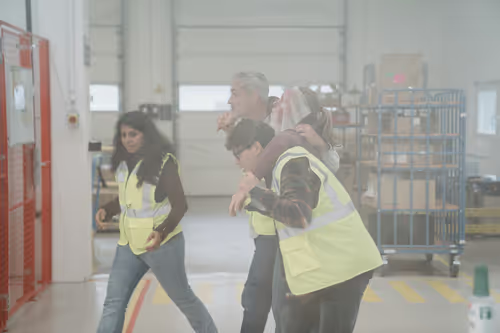
Request a realistic simulation
Transform your emergency training with realistic wound simulations and scenarios to create an intensive and effective learning experience for your team.
Discover our trauma kits
Purchase premium trauma kits, including tourniquets, bandages, and other essential materials for emergencies in challenging environments.
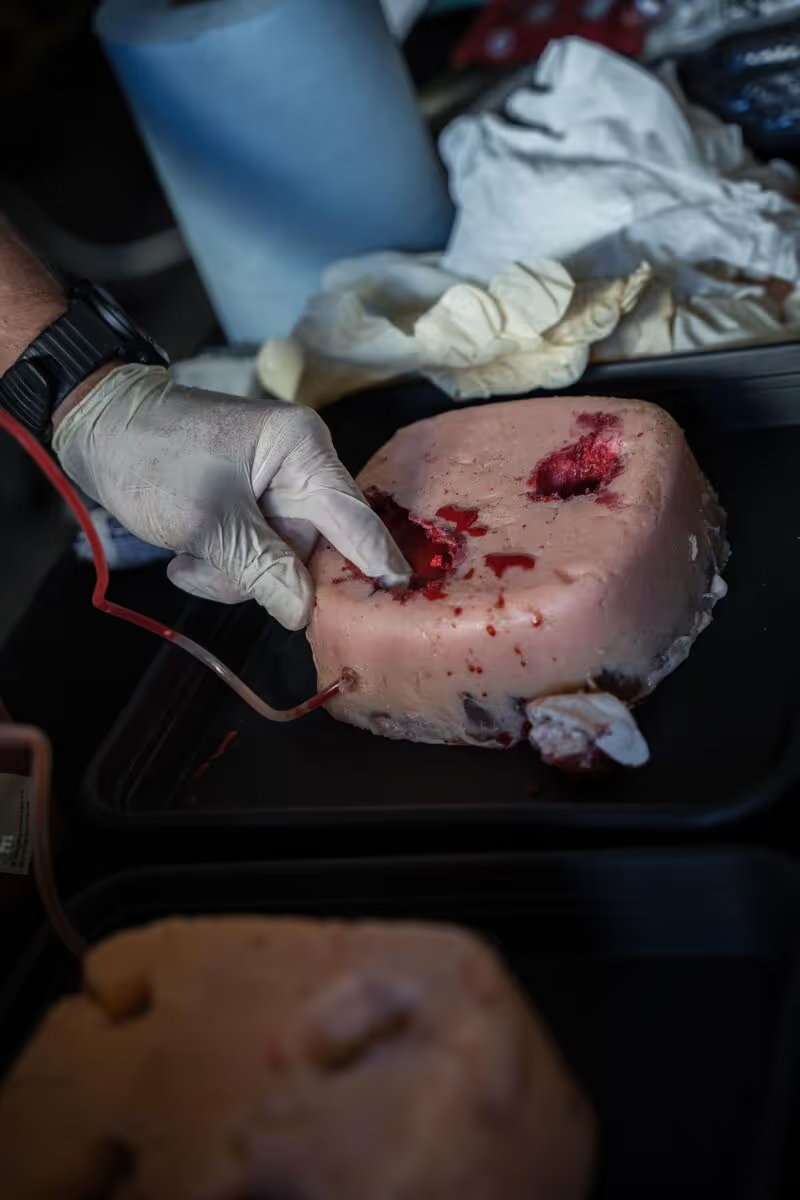
Book your first aid course
Prepare your team for critical situations with hands-on training and real scenarios. Learn how to react quickly in emergencies.

.avif)