
First aid in the workplace: more than just a checkbox
Every company eventually faces the same question: Do you provide first aid in the workplace just because you have to – or do you see it as a real part of your safety culture? Because first aid in the workplace means more than just meeting minimum legal requirements; it means being so well-organized and trained that employees can react correctly, safely, and effectively in an emergency.
Of course, there are regulations. Workplace first aiders must be trained. First aid supplies must be available. Courses must be completed and refreshed. First aid kits, procedures, responsibilities, and documentation are part of the basic organization in many companies. Management is responsible for organizing first aid in the workplace. And all first aid services must be documented.
This is important. Without minimum standards, many things wouldn't happen at all.
But the crucial question is different:
Does first aid in the workplace actually work when something really happens?
Not on paper. Not in theory. Not in a training room with a prepared practice dummy. But on the production floor, at the construction site, in the warehouse, in the workshop, in the lab, on company premises, in the office, outdoors, amidst noise, stress, time pressure, and real colleagues.
That is exactly where obligation is separated from true crisis resilience.
A company can view first aid as a necessary minimum. You take the required course, put up the first aid kit, meet the requirements, and hope that nothing ever happens. The names of first aiders and important emergency numbers should also be clearly displayed throughout the workplace.
Or a company can view first aid as part of resilience : as the ability to remain capable of acting in critical situations, to protect employees, to improve processes, and to not just document safety, but truly live it.
That is exactly what this is about: companies, safety officers, operations managers, first responders, and anyone who wants to make their workplace first aid training and safety organization more effective. This article shows where legal requirements end, why standard courses are often insufficient, how tailored training and realistic drills create lasting competence, and the concrete added value this brings to safety, operational stability, and trust within the company.
The difference is enormous.
Basic First Aid Course: Standard courses are important – but they don't always fit the reality of a business.
Classic first aid courses serve an important function. They teach the basics, establish a common minimum standard, and for many participants, they are the first or only contact with first aid since their driver's license training. The legal appointment of first responders has been clearly regulated since 2010.
The problem is not that such courses are wrong.
The problem is that they often remain very general.
An office has different risks than a construction site. A plastics production facility has different challenges than a logistics center. A workshop functions differently than a laboratory. An industrial plant with machinery, heat, chemicals, noise, and shift work needs different examples than an administrative site. A company with many employees of different languages and educational backgrounds requires a different approach than a small team with high technical expertise. At the same time, the number of required first responders is based on the number of employees and in practice is usually between 5 and 10%.
Nevertheless, first aid courses are often conducted as if all businesses were the same.
Participants sit in the course, listen to theoretical content, practice a few basic measures, and then return to their daily work routine. For some, this is sufficient. For others, it remains too abstract. Many experience such courses as a mandatory event rather than genuine preparation.
Yet the workplace is exactly the kind of environment where first aid can be put into practice in a very tangible way.
Where is the nearest first aid kit? Who knows where the AEDis? How long does it take for emergency services to reach the site? Which access route is actually clear in an emergency? Who will direct them? What happens if an accident occurs during the night shift? Which machines need to be secured? Who looks after colleagues, witnesses, or family members? What equipment is available – and has it ever been used in a real-world scenario? Depending on the type of business, devices like defibrillators should also be part of the plan.
These are questions that a standard course often fails to answer.
Tailored training can address exactly these points.
The difference starts before the training
At Critical Knowledge Austria , effective corporate training doesn't just start on the first day of the course.
It starts beforehand.
We sit down with those responsible within the company: safety officers, safety representatives, HSE, management, occupational health physicians, team leads, or other relevant personnel. The goal is to first understand how the business actually operates.
What are the risks? Which areas are particularly relevant? What kind of accidents are realistic? What emergency procedures are already in place? Where are the first aid kits, AEDs, first aid and trauma equipment, eye wash stations, trauma supplies, or other additional materials located? Who are the designated first responders? What are the shift patterns? What is the site access like? Where are the assembly points? What languages are spoken? What questions are really on the employees' minds?
Only once you have this complete picture can you build a training program that truly fits the workplace.
This is the difference between an off-the-shelf course and training that actually makes a difference in your company's day-to-day operations.
A good portfolio of first aid and trauma training courses doesn't have to be complicated. But it must be relevant. The examples must fit the target audience. The language must be easy to understand. The equipment must be what is actually available on-site. The scenarios must be credible. Participants need to realize: This affects us. This could happen here. And I can do something about it.
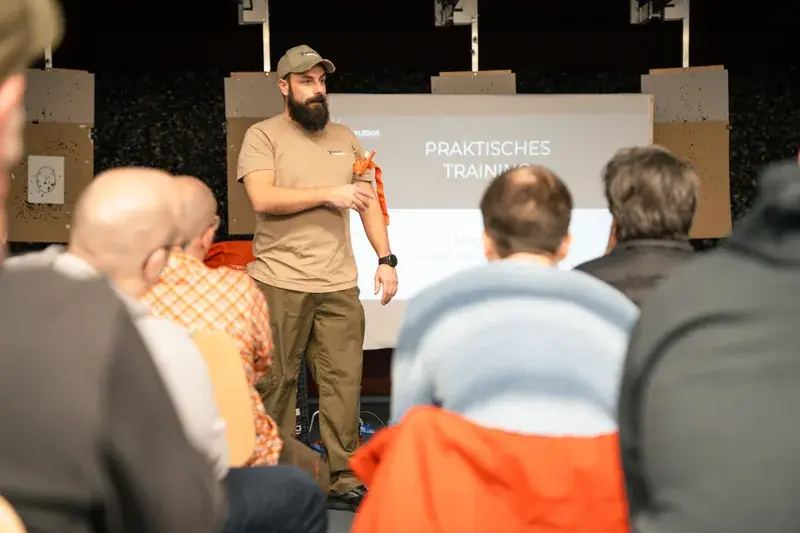
First aid needs to be hands-on
You don't learn first aid just by listening.
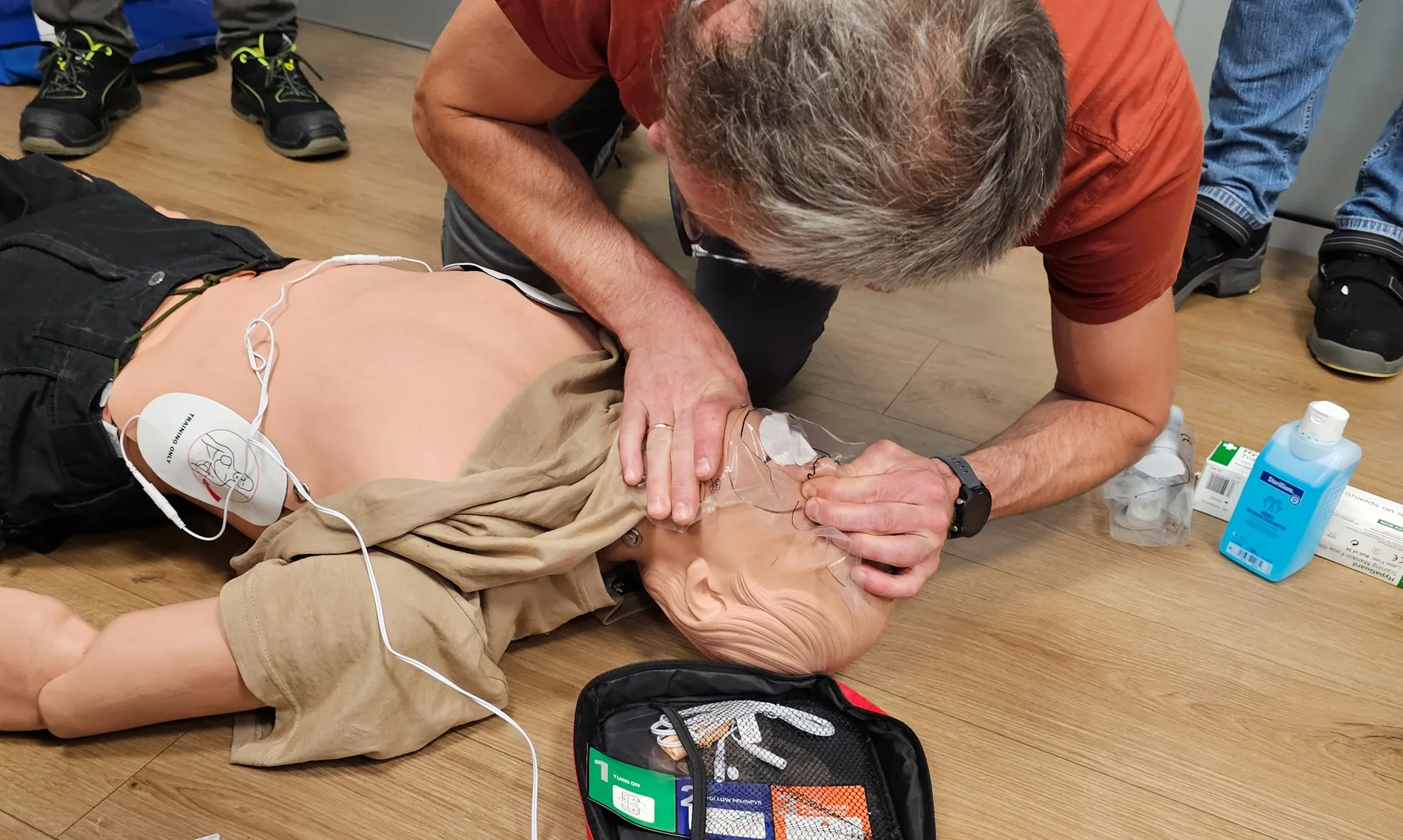
Of course, you need the basics. You have to understand why you are doing something. You need to know when to call emergency services, how to assess an unconscious person, how chest compressions work, how to recognize severe bleeding, and what role personal safety plays. These life-saving immediate measures also include securing the accident site and moving injured persons out of the danger zone, if it is safe to do so—much like how it is structured and taught in a comprehensive 16-hour first aid course for businesses .
But knowledge alone is not enough.
In an emergency, you have to act. And action comes from practice.
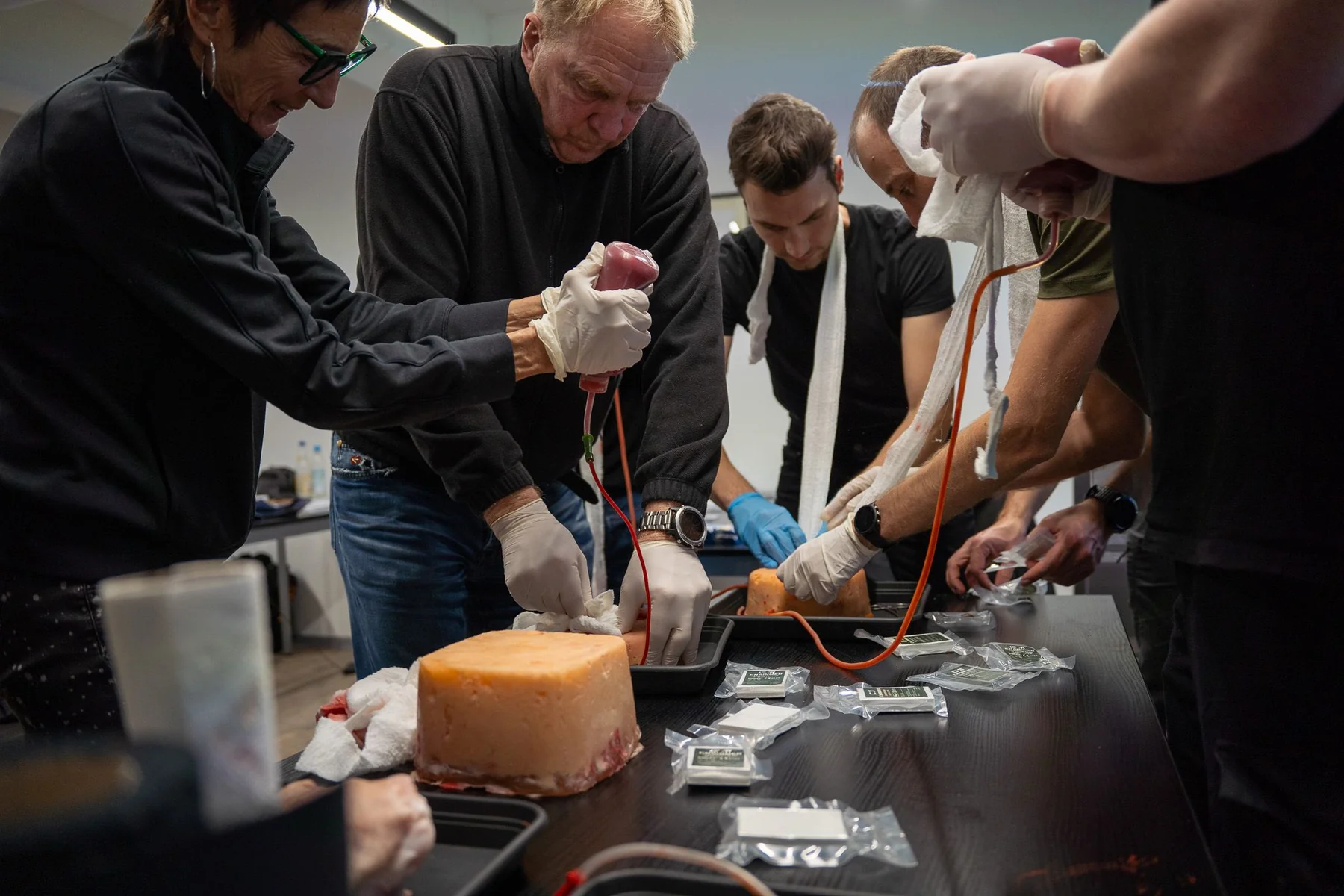
That is why we place great importance on ensuring our participants get hands-on experience during our training. They shouldn't just hear what the right thing to do is; they should try it out. They should handle the equipment. They should practice simple bandaging techniques on each other. They should experience what it’s like to talk to someone, delegate tasks, act while being observed, or perform a procedure repeatedly.
Practicing together has an effect that is often underestimated: it also acts as team building.
When colleagues train first aid together, a different dynamic emerges. You help one another. You practice on each other. You might laugh when something doesn't work right away. You notice who stays calm, who takes charge quickly, who asks good questions, and who needs support. A mandatory event can turn into a shared experience.
That makes first aid more human.
And it lowers the barrier to taking action.
Once you have practiced applying a bandage, approaching a person, or taking on a role in a scenario with colleagues, the first step in a real emergency no longer feels quite as daunting.
Learning can be serious—and still be motivating
First aid is a serious subject. It involves injuries, illnesses, workplace accidents, medical emergencies, and, in the worst-case scenario, life and death.
Nevertheless, training can be motivating.
In fact, it must be motivating.
If participants leave a course thinking, "That was boring, dry, and I'll have forgotten everything in two weeks," then little has been achieved. But if they leave saying, "I feel more confident now. I understand why this is important. I should be better prepared at home or in my car," then something has changed.
That is our goal.
We don't just want to dump information. We want to make an impression. We want participants to associate first aid with positive feelings: not with fear, shame, or a sense of obligation, but with confidence in their actions, responsibility, and the feeling of being able to help within the scope of their own abilities.
To achieve this, we use a variety of didactic elements. People learn differently. Some need explanation, others demonstration, others repetition, others practical exercises, and others discussion. Good training appeals to multiple learning styles. It must be technically sound, but also understandable, tangible, and engaging.
There should also be room for fun. Not because first aid is funny, but because motivation improves learning. Those who feel comfortable are more likely to ask questions. Those who are allowed to experiment remember more. Those who laugh lose their inhibitions. Those who are allowed to make mistakes during training are less likely to make them in a real emergency.
Sustainability through regular first aid refresher courses instead of forgetting everything every few years
A major problem in first aid is forgetting.
Many people take a course at some point, perhaps for their driver's license, for work, or for a role in a club. After that, nothing happens for years. By the time the next refresher comes around, you realize: much of it is gone. The sequence is unclear. The hesitation is high again. The equipment looks unfamiliar. The techniques are no longer second nature.
If first aid is only briefly refreshed every two or four years, very little of it tends to stick.
That is why sustainability ein zentraler Punkt unserer Trainingsphilosophie.
Nachhaltigkeit bedeutet nicht, dass jeder Mitarbeiter ständig hochspezialisierte Notfallmedizin trainieren muss. Es bedeutet, dass Erste Hilfe im Unternehmen nicht als einmaliges Ereignis gesehen wird, sondern als Fähigkeit, die gepflegt werden sollte.
Das kann durch regelmäßige Wiederholungen passieren. Idealerweise werden alle Mitarbeitenden jährlich durch eine Unterweisung über das richtige Verhalten im Notfall informiert. Durch kurze interne Übungen. Durch Szenarien. Durch Sicherheitstage. Durch Materialchecks. Durch klare Kommunikation, wo Material liegt. Durch praktische Auffrischungen, die nicht jedes Mal wieder bei null beginnen. Durch motivierte Ersthelfer, die nicht nur eine formale Rolle haben, sondern sich wirklich zuständig fühlen.
Ein gutes Training kann dafür ein Startpunkt sein.
Im Idealfall wirkt es über den Betrieb hinaus. Viele Teilnehmer nehmen etwas für ihr Privatleben mit: für Familie, Kinder, Partner, Freunde, Sportverein, jagdliche Notfälle und Jagdunfälle, Feuerwehr, Schießstand, Outdoor-Aktivitäten oder den Alltag. Denn statistisch und praktisch passiert Erste Hilfe nicht nur im Betrieb. Viele Notfälle passieren zuhause, unterwegs oder in der Freizeit.
Wenn ein Unternehmen gute Erste-Hilfe-Trainings ermöglicht, profitiert also nicht nur der Arbeitsplatz. Es profitieren auch die Menschen dahinter.
Betriebliche Ersthelfer lernen ihre Grenzen kennen
Ein oft unterschätzter Wert guter Trainings ist, dass Teilnehmer nicht nur lernen, was sie tun können.
Sie lernen auch, wo ihre Grenzen liegen.
Das ist wichtig.
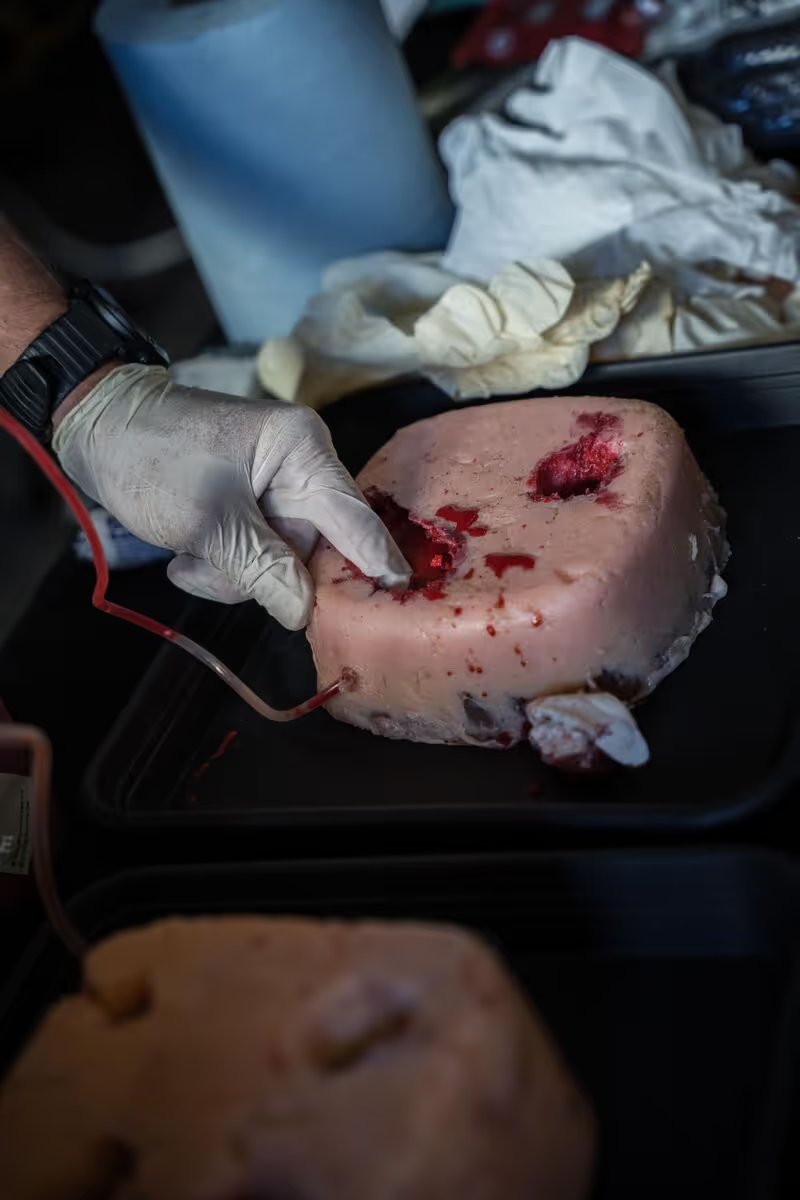
Erste Hilfe bedeutet nicht, alles zu können. Sie bedeutet, in den ersten Minuten sinnvoll zu handeln, ohne sich selbst oder andere unnötig zu gefährden. Es geht um Eigenschutz, Notruf, einfache lebensrettende Maßnahmen, Blutungskontrolle, etwa trainiert mit einem Wound-Packing-Trainer für realistische Blutungskontrolle, Lagerung, Betreuung, Kommunikation und Übergabe.
Gute Trainings vermitteln nicht das Gefühl: „Jetzt bin ich Profi."
Sie vermitteln: „Ich weiß besser, was ich tun kann. Ich weiß, was ich nicht tun sollte. Ich weiß, wann ich Hilfe brauche. Ich weiß, wie ich andere einbinde. Ich kenne mein Material. Ich kenne meine Rolle."
Das ist realistische Handlungssicherheit.
Gerade im Betrieb ist das entscheidend. Ein Mitarbeiter muss nicht den Rettungsdienst ersetzen. Aber er kann die ersten Minuten überbrücken, die Lage sichern, Kollegen anleiten, Notruf und Einweisung organisieren und verhindern, dass Chaos entsteht.
Warum das für Arbeitgeber mehr ist als Fürsorge
Aus Sicht des Arbeitgebers ist gutes Erste-Hilfe-Training nicht nur ein menschliches Thema. Es ist auch ein Thema von Risikomanagement, Betriebsstabilität und Krisenfähigkeit.
Ein schwerer Arbeitsunfall ist für jedes Unternehmen eine massive Belastung. Menschlich, psychologisch, organisatorisch, rechtlich und wirtschaftlich.
Wenn die Rettungskette gut funktioniert, kann das einen Unterschied machen. Nicht nur für das Überleben, sondern auch für den weiteren Verlauf, die Lebensqualität des Betroffenen, die Belastung der Kollegen, die Nachbereitung und die Dauer der Betriebsunterbrechung.
Das muss man vorsichtig formulieren, weil man in der Ersten Hilfe nichts garantieren kann. Aber klar ist: Ein Betrieb, in dem Menschen vorbereitet sind, Material finden, Aufgaben verteilen, Notruf und Einweisung funktionieren und grundlegende Maßnahmen sicher beherrscht werden, steht in einer Krise anders da als ein Betrieb, in dem Erste Hilfe nur am Papier existiert.
Ein gutes Training zeigt den Mitarbeitern außerdem etwas sehr Wichtiges:
Der Arbeitgeber kümmert sich.
Nicht nur formal. Nicht nur mit einem Aushang. Sondern praktisch.
Wenn ein Unternehmen bereit ist, mehr zu investieren als das absolute Minimum, wird das wahrgenommen. Mitarbeiter merken, ob Sicherheit nur ein Pflichtkapitel ist oder ob sie ernst genommen wird. Das stärkt Vertrauen. Es stärkt Sicherheitskultur. Und es kann auch ein Signal nach außen sein.
Manche Unternehmen wollen solche Trainings bewusst intern und diskret halten. Andere zeigen sie in Social Media, im Intranet, in Nachhaltigkeitsberichten oder im Employer Branding. Beides ist möglich. Entscheidend ist, dass der Mehrwert echt ist.
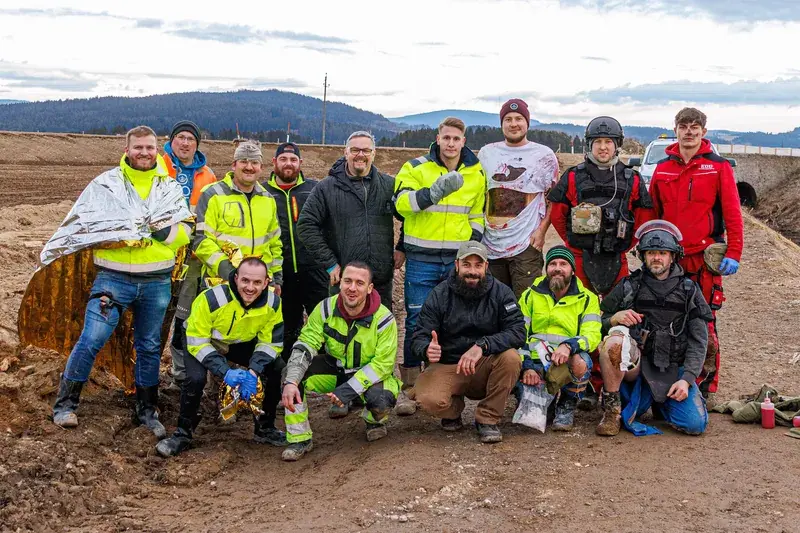
Szenarientraining: Wenn Abläufe wirklich getestet werden
Neben klassischen Erste-Hilfe-Kursen und Auffrischungen bieten wir auch maßgeschneiderte Szenarientrainings an.
Das ist besonders dort sinnvoll, wo Unternehmen wissen wollen, ob ihre Abläufe wirklich funktionieren.
Ein Szenarientraining kann in einer Werkstatt, Produktionshalle, auf einem Betriebsgelände, in einem Lager, auf einer Baustelle oder im Rahmen eines Sicherheitstages stattfinden. Dabei geht es nicht darum, Menschen zu erschrecken oder eine Show zu machen. Es geht darum, realistische Situationen so zu gestalten, dass Teilnehmer ins Handeln kommen.
Wer ruft den Notruf? Wer holt Material? Wer sichert die Maschine? Wer kümmert sich um Kollegen? Wer weist den Rettungsdienst ein? Wer übernimmt Kommunikation? Wer erkennt, dass es mehrere Betroffene gibt? Wer dokumentiert? Wer bleibt beim Patienten?
Auf dem Papier sind solche Abläufe oft klar. In der Realität merkt man erst im Szenario, wo es hakt.
Vielleicht ist der Verbandkasten zu weit weg. Vielleicht weiß niemand, wo der AED ist. Vielleicht ist die Zufahrt blockiert. Vielleicht ist die Alarmierung unklar. Vielleicht reden drei Personen gleichzeitig. Vielleicht wird ein wichtiger Bereich nicht abgesichert. Vielleicht ist das Zusatzmaterial vorhanden, aber niemand kennt es.
Genau dafür sind Szenarien wertvoll.
Sie zeigen nicht nur Fehler. Sie erzeugen Lessons Learned.
Und wenn sie gut durchgeführt werden, ohne Menschen bloßzustellen, entsteht daraus ein enormer Lerngewinn.
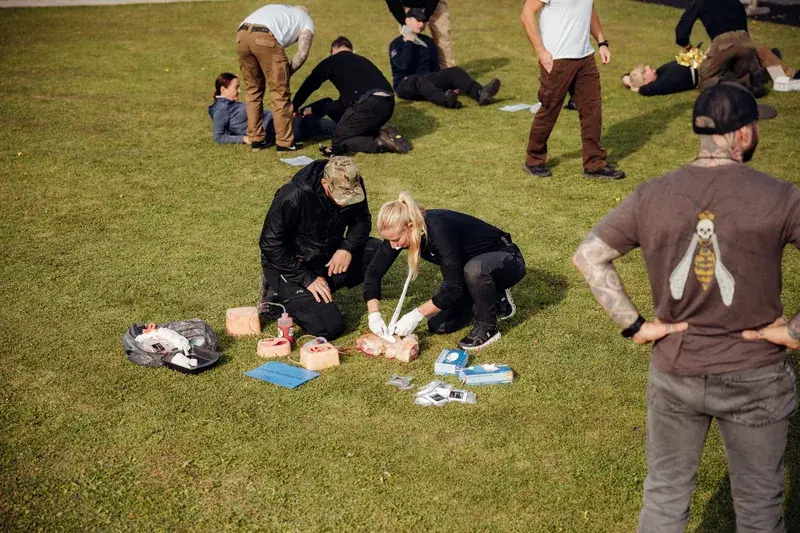
Einsatzsimulation, Moulage und realistische Übungen
Für größere Übungen, Sicherheitstage oder Trainings mit Blaulichtorganisationen kann realistische Simulation von Notfällen und Verletzungen einen zusätzlichen Wert bringen.
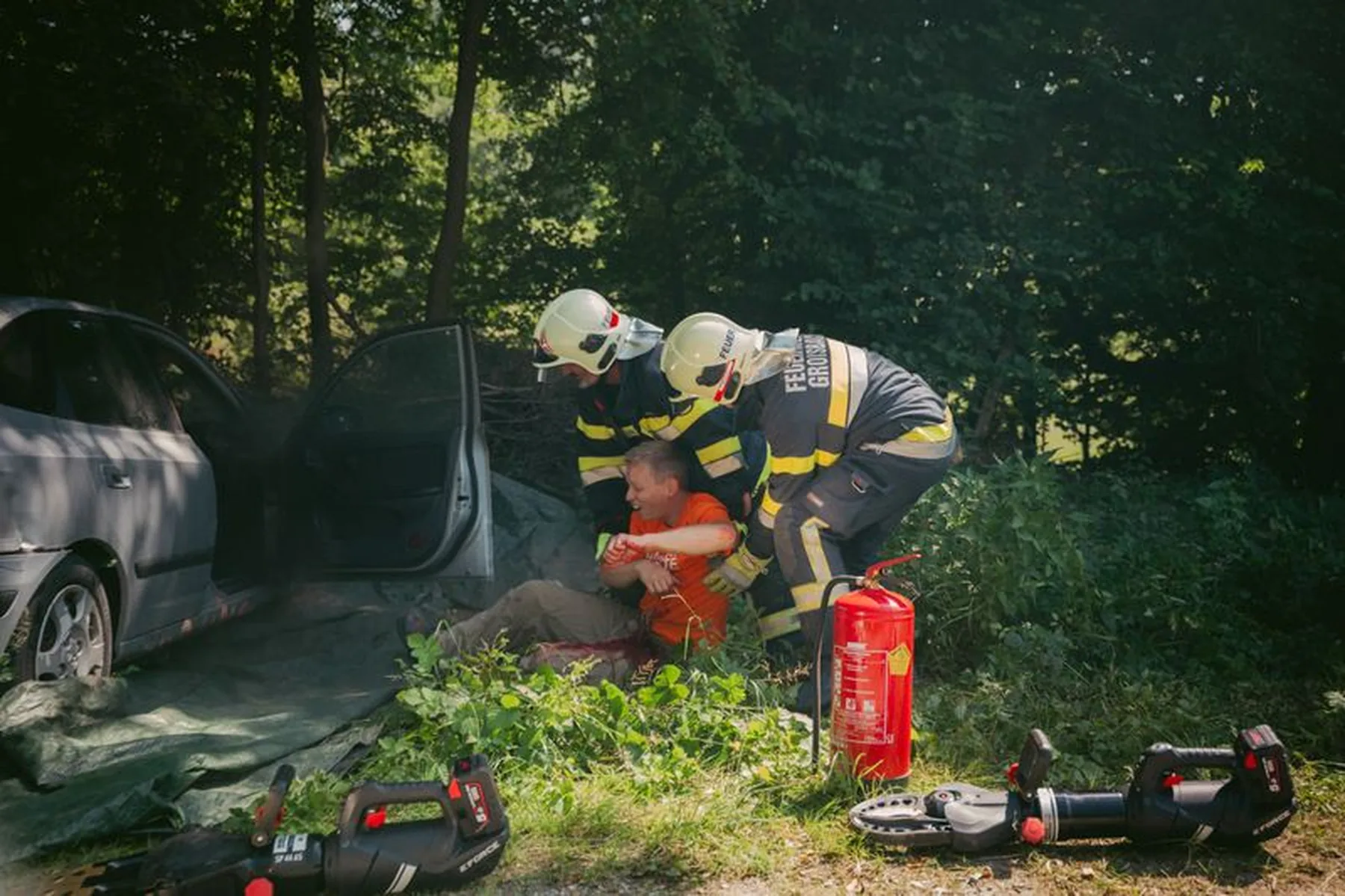
Critical Knowledge kann Szenarien gestalten, Darsteller einbinden, Verletzungsmuster realistisch darstellen und je nach Rahmen auch mit realistischer Wundsimulation und Moulage, amputierten Darstellern, Kunstblut, Kunstfeuer, Pyrotechnik oder anderen Darstellungsmitteln arbeiten, sofern es vor Ort sicher, sinnvoll und erlaubt ist.
Der Zweck ist nicht Spektakel.
Der Zweck ist Realismus.
Denn echte Notfälle wirken auf Menschen. Blut, Schreie, Lärm, Rauch, Dunkelheit, mehrere Betroffene, Zeitdruck und Zuschauer verändern Verhalten. Wer immer nur im sterilen Schulungsraum trainiert, kennt diese Faktoren nicht – und probt selten mit taktischer Einsatz- und Trauma-Ausrüstung, wie sie im Ernstfall tatsächlich genutzt wird.
Gute Simulation bringt genau diese Faktoren kontrolliert ins Training. Sie macht sichtbar, was unter Stress passiert. Sie hilft Teilnehmern, die eigene Reaktion kennenzulernen. Sie gibt Rettungskräften, internen Ersthelfern, Sicherheitsdiensten oder betrieblichen Teams eine realistischere Übungsumgebung, insbesondere wenn sie mit realistischem Trainingsmaterial für Notfallübungen kombiniert wird.
Wichtig ist dabei: Sicherheit vor Realismus. Jede Übung braucht Planung, Rollen, Grenzen, No-Play-Regeln, Briefing, Durchführung und Debriefing.
Realistische Simulation ist kein improvisiertes Kunstblut. Sie ist ein Ausbildungswerkzeug. Erfahrene Erste-Hilfe-Trainer passen solche Übungen an den Bedarf des Betriebs und die Zusammenarbeit mit internen oder externen Kräften an – getragen von einer Ausbildungsphilosophie von Critical Knowledge, die stark auf Praxis und Trauma-Training fokussiert ist.
Was Unternehmen durch maßgeschneidertes Training gewinnen
Der Mehrwert eines maßgeschneiderten Erste-Hilfe-Trainings liegt nicht in einem einzelnen Punkt.
Er entsteht durch das Zusammenspiel.
Mitarbeiter werden sicherer. Ersthelfer kennen ihr Material besser. Verantwortliche sehen, wo Abläufe funktionieren und wo nicht. Teams erleben Erste Hilfe gemeinsam. Hemmschwellen sinken. Fragen werden geklärt. Szenarien werden greifbar. Das Unternehmen zeigt Fürsorge. Und die Sicherheitskultur wird praktischer. Jährlich werden dabei über 44.000 Ersthelfer:innen ausgebildet.
Das Ergebnis ist nicht, dass jeder Teilnehmer zum Profi wird.
Das Ergebnis ist, dass die ersten Minuten eines Notfalls nach einem Erste-Hilfe-Grundkurs oder einem anderen Grundkurs für betriebliche Ersthelfer:innen besser laufen können, wobei der Kurs mindestens 16 Stunden umfasst – vorausgesetzt, es stehen auch geeignete Notfallsets für schnelle Erstmaßnahmen zur Verfügung.
Und genau diese ersten Minuten sind entscheidend.
Mindestmaß oder echter Mehrwert?
Am Ende steht eine einfache Frage.
Will ein Unternehmen nur die Pflicht erfüllen?
Oder will es Erste Hilfe als Teil einer echten Krisen- und Sicherheitskultur verstehen?
Das Mindestmaß ist wichtig. Es schafft eine Grundlage. Aber wer mehr will, muss tiefer gehen: in die Realität des Betriebs, in die Fragen der Mitarbeiter, in die vorhandenen Materialien, in echte Abläufe, in Szenarien, in Wiederholung und in Nachhaltigkeit.
Dafür braucht es motivierte Sicherheitsverantwortliche, Führungskräfte und Unternehmen, die diesen Mehrwert erkennen. Es braucht Menschen, die sagen: Wir wollen nicht nur den Haken auf der Liste. Wir wollen, dass es funktioniert.
Genau für diese Unternehmen ist Critical Knowledge der richtige Partner.
Wir bieten betriebliche Erste-Hilfe-Kurse in flexiblen Kursformaten – je nach Zielsetzung als Grundkurs, Auffrischungskurs, erste Hilfe Auffrischungskurs oder betriebsinternes Format –, 16-Stunden-Kurse, refreshers, tailored training, scenario-based training, operational simulations, and safety days with real-world relevance. We adapt course content and practical application specifically to your business.
Not as a show.
Not as a box-ticking exercise.
But as an investment in people, operational confidence, and resilience.
Bottom line: Good first aid is responsibility in action
First aid in the workplace can be a formality.
Or it can be a visible sign that a company takes responsibility.
For employees.
For teams.
For safety.
For crisis resilience.
For when it really matters.
Good training costs more than the absolute minimum. But it can also achieve significantly more.
It motivates. It connects. It strengthens teams. It highlights limitations. It improves processes. It gets people into action. And it ensures that first aid isn't forgotten as soon as the course is over.
Anyone who first aid in the workplace takes it seriously is investing in more than just legal compliance.
They are investing in a culture where people look out for one another.

Our recommendation
If you want to provide practical training for your workplace first aiders: Request a 16-hour first aid course for businesses – as initial first aid training
If you want to refresh and motivate your existing first aiders: Book recertification / refresher training – as a refresher course
If you want to prepare your company for real-world scenarios: Request customized corporate training
If you want to test procedures, equipment, and reactions under stress: Plan scenario training or emergency simulations
Further information on course content and available formats available upon request.
Sources and professional context
[1] Austrian Labour Inspectorate: First aiders; 16-hour training and refresher courses every four years (8 hours) or every two years (4 hours), with different minimum requirements for very small workplaces; legal basis includes, among others, §26 AschG, Section 40 AstV and the Workplace Ordinance.
[2] Austrian Labour Inspectorate: First aid in workplaces and first aid kits according to ÖNORM Z 1020; for construction sites additionally with reference to the Construction Workers Protection Ordinance or BauV.
[3] DGUV: First aid equipment and operational organization; type, quantity, and storage locations depend on company size, hazards, scale, structure, and the organization of the company's emergency services.
[4] Critical Knowledge: Workplace first aid courses, customized corporate training, scenario-based training, and operational simulations; professionally aligned with recognized standards of the Red
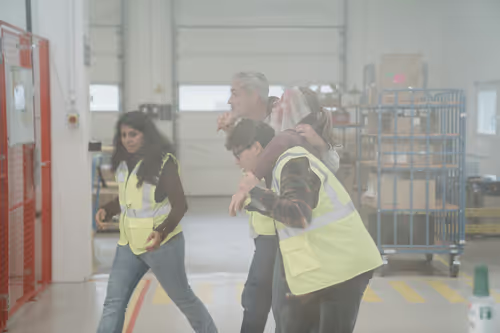
Request a realistic simulation
Transform your emergency training with realistic wound simulations and scenarios to create an intensive and effective learning experience for your team.
Discover our trauma kits
Purchase premium trauma kits, including tourniquets, bandages, and other essential materials for emergencies in challenging environments.
Book your first aid course
Prepare your team for critical situations with hands-on training and real scenarios. Learn how to react quickly in emergencies.